WATER QUALITY & BIOLOGICAL DIVERSITY
Sixteen sites were monitored year-round for chloride to determine how locations fare in winter months when road salts are applied, and in summer during high-production times for aquatic plants and animals.
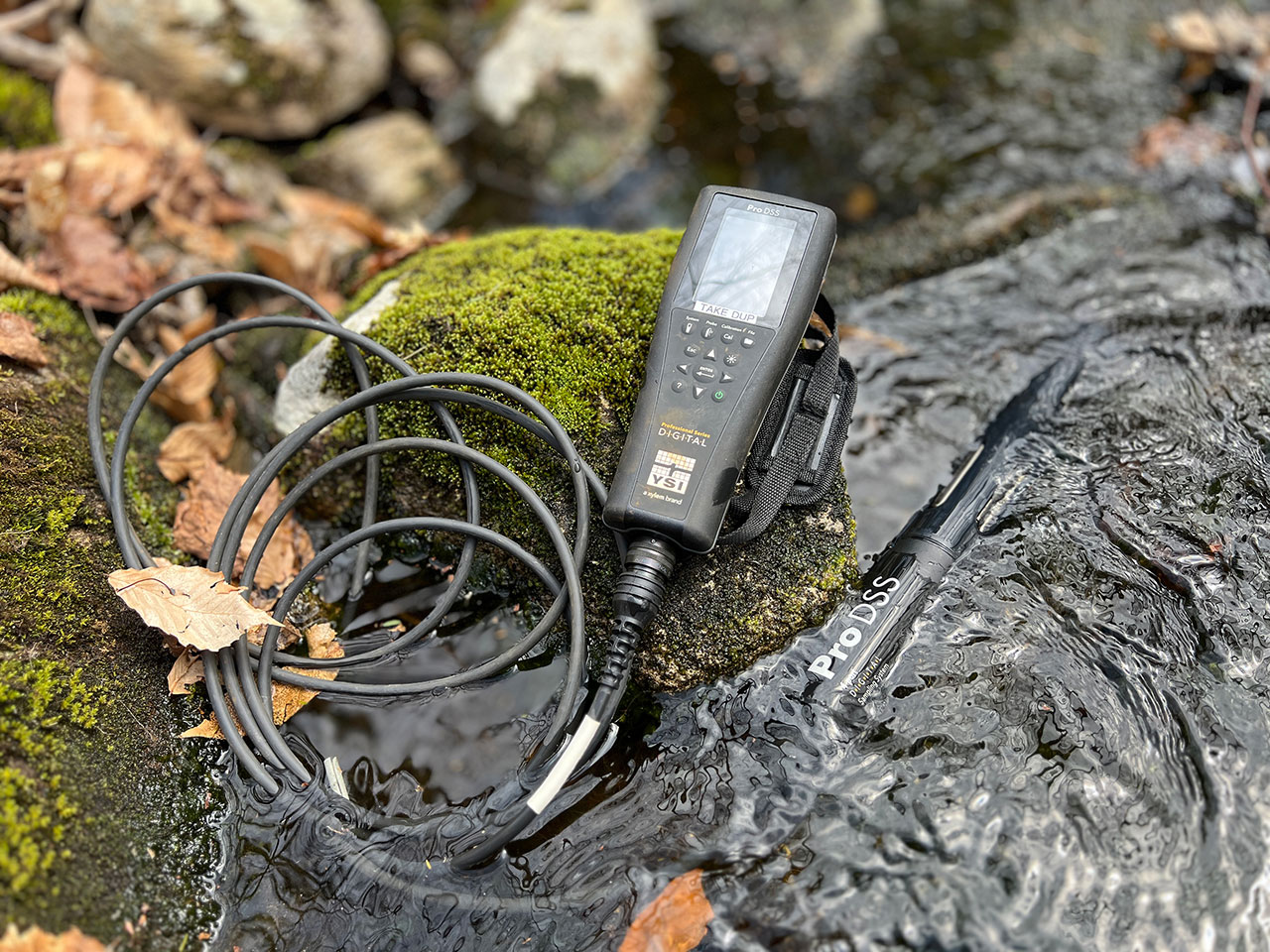
In fiscal year 2023, LFSWS funded FRWA’s purchase of continuous conductivity monitors to enable conductivity research in relation to chloride pollution. From November 2023 to August 2024, several locations in the lower river watershed that had been identified as having intermittently high chloride levels were monitored with the new monitors, given that the intermittent high chloride levels suggested that other spikes were probably missed. Seven continuous conductivity loggers were deployed at these locations to record conductivity data every hour. Data showed increases that were previously missed, and approximate chloride was calculated from these datasets. This allowed FRWA to determine that some locations fared well over winter months, and some were worse than expected.
READ MORE IN THE
 Lower Farmington River and Salmon Brook Wild & Scenic