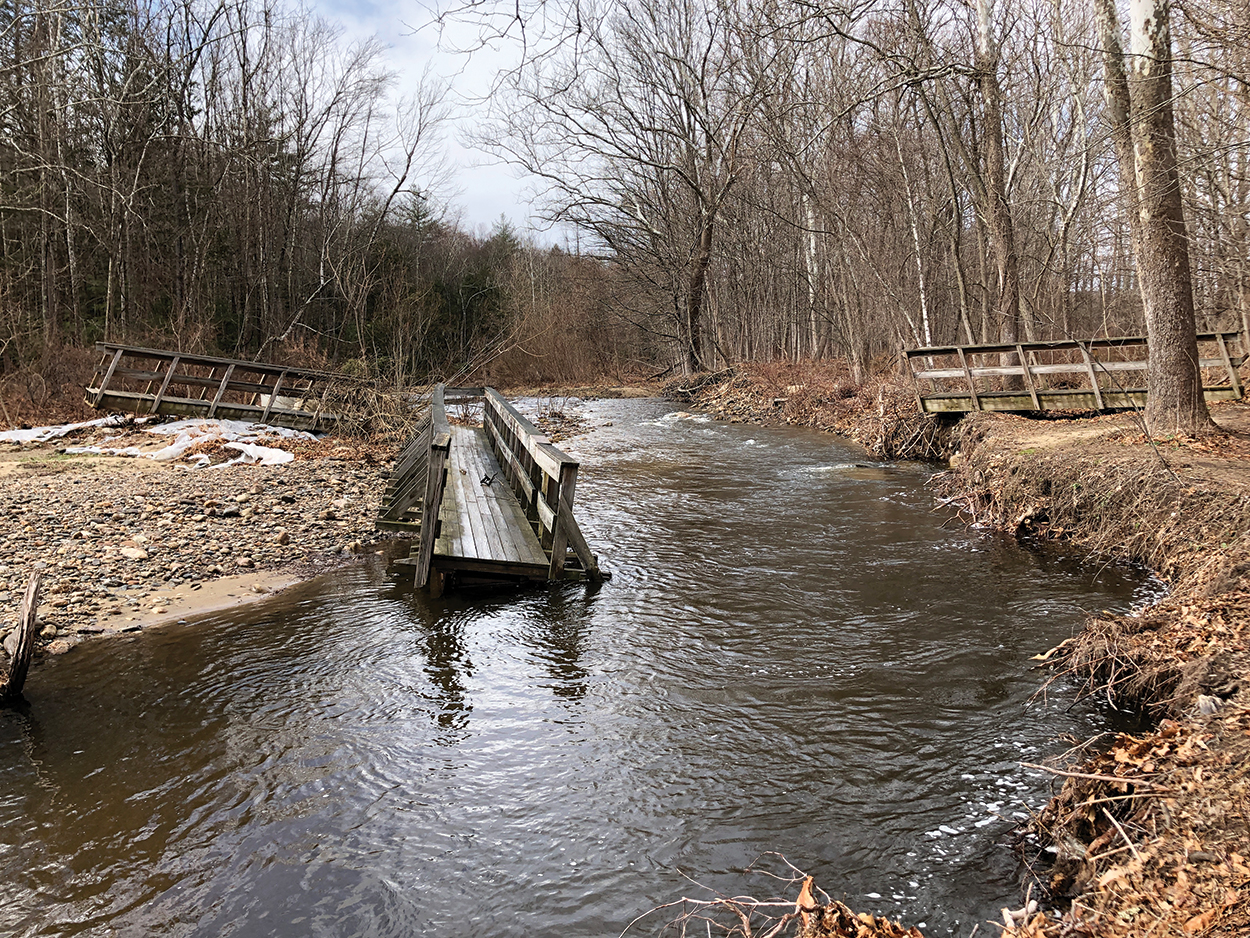
WATER QUALITY & BIOLOGICAL DIVERSITYIn October 2021, a storm washed out the pedestrian bridge at the town-owned Holcomb Farm which had provided access to the farm property west of the bridge and its very popular trail network. Both the Friends of Holcomb Farm and the Town of Granby wanted access to the land restored andContinue reading “Engineering Study for Salmon Brook Pedestrian Bridge Replacement”
Author Archives: lfriverscenic
Pinchot Sycamore Park Invasive Control
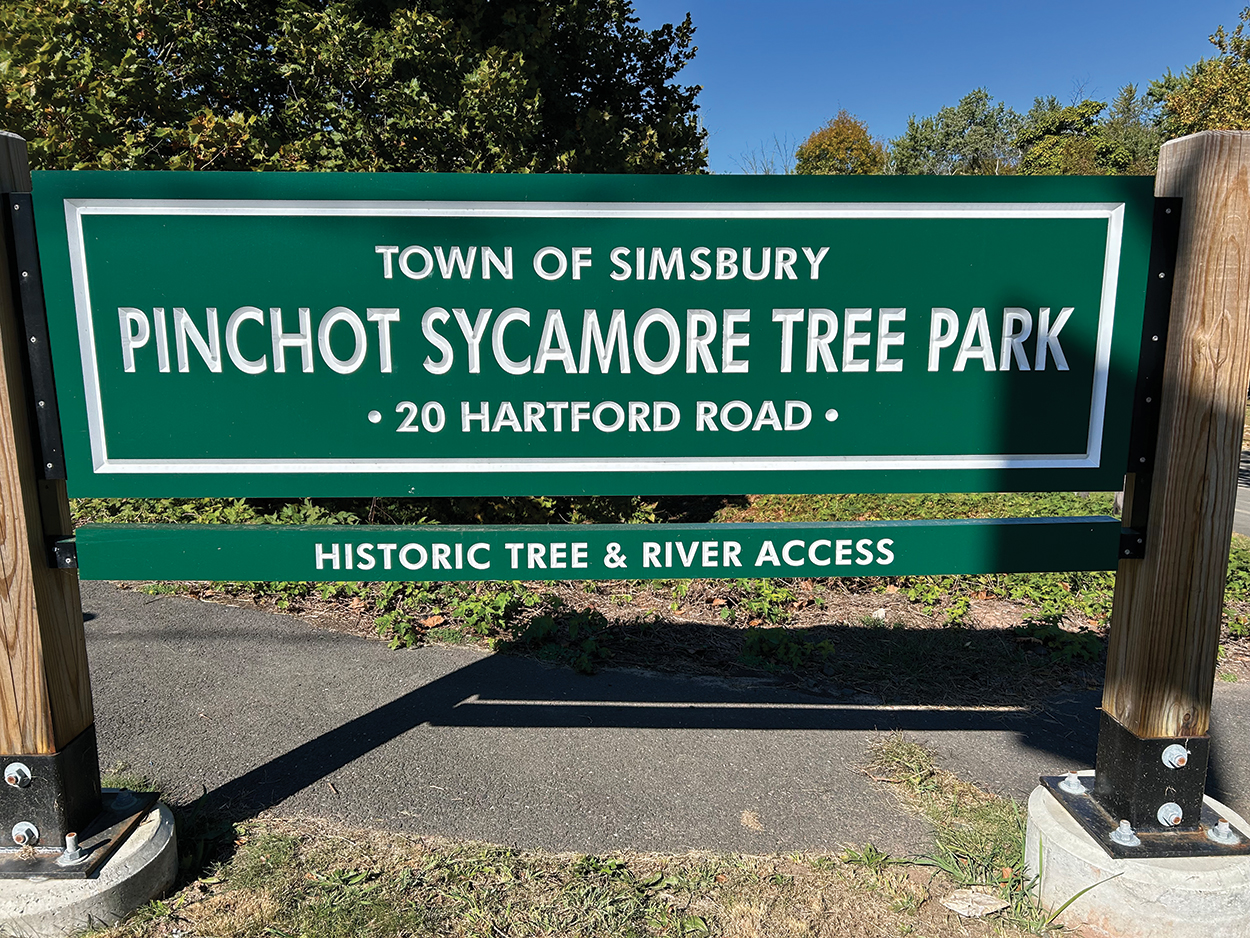
WATER QUALITY & BIOLOGICAL DIVERSITYSimsbury is the home of the Pinchot Sycamore, the largest Tree in CT. It is located in a small town park on the Farmington River, where a bridge on the heavily traveled Route 185 crosses the river. The tree is named in honor of Gifford Pinchot, who was born in SimsburyContinue reading “Pinchot Sycamore Park Invasive Control”
Invasive Water Chestnut Pulls
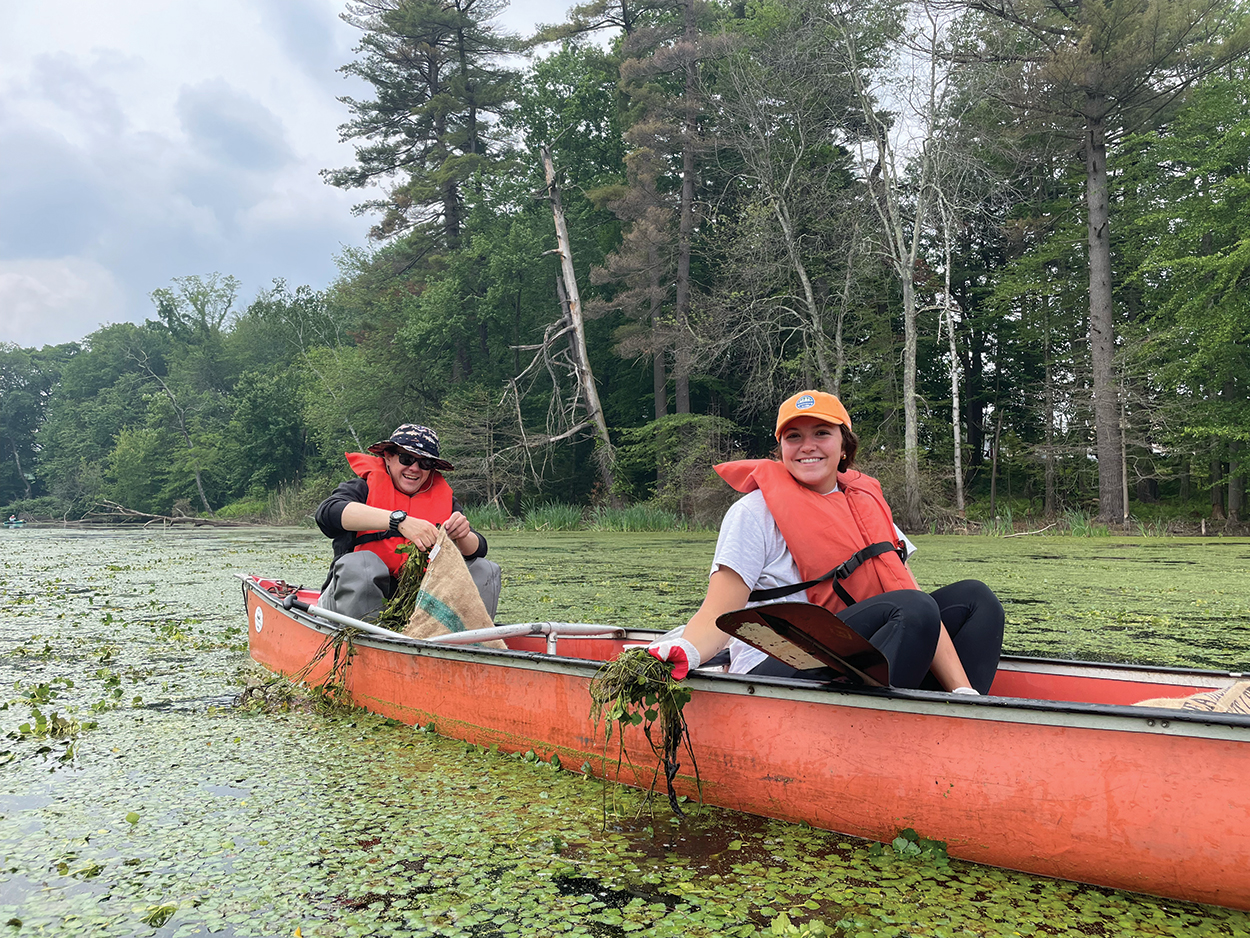
WATER QUALITY & BIOLOGICAL DIVERSITYLFSWS funded The Farmington River Watershed Association’s effort to carry out a series of invasive water chestnut removals on Barber’s Pond in Bloomfield, CT. Invasive water chestnut is an issue in many areas of the CT River watershed, and so far has only been reported in the Farmington River watershed inContinue reading “Invasive Water Chestnut Pulls”
Hemlock Woolly Adelgid Control

WATER QUALITY & BIOLOGICAL DIVERSITYThis year, LFSWS funded the Farmington River Watershed Association’s purchase of 10,000 S. tsugae for release as a biological control of the invasive hemlock woolly adelgid (HWA) in the lower Farmington River and Salmon Brook watershed. HWA is an invasive aphid-like insect that attacks North American hemlock trees. They can beContinue reading “Hemlock Woolly Adelgid Control”
CT Green Snow Pro Training
WATER QUALITY & BIOLOGICAL DIVERSITYLFSWS supported funding for the lower Farmington River and Salmon Brook Wild and Scenic town employees and elected officials to attend the CT Green Snow Pro training. This training is offered by the T2 Center at UCONN. It provides resources on how to use road salt more effectively in order toContinue reading “CT Green Snow Pro Training”
Cyanobacteria Research
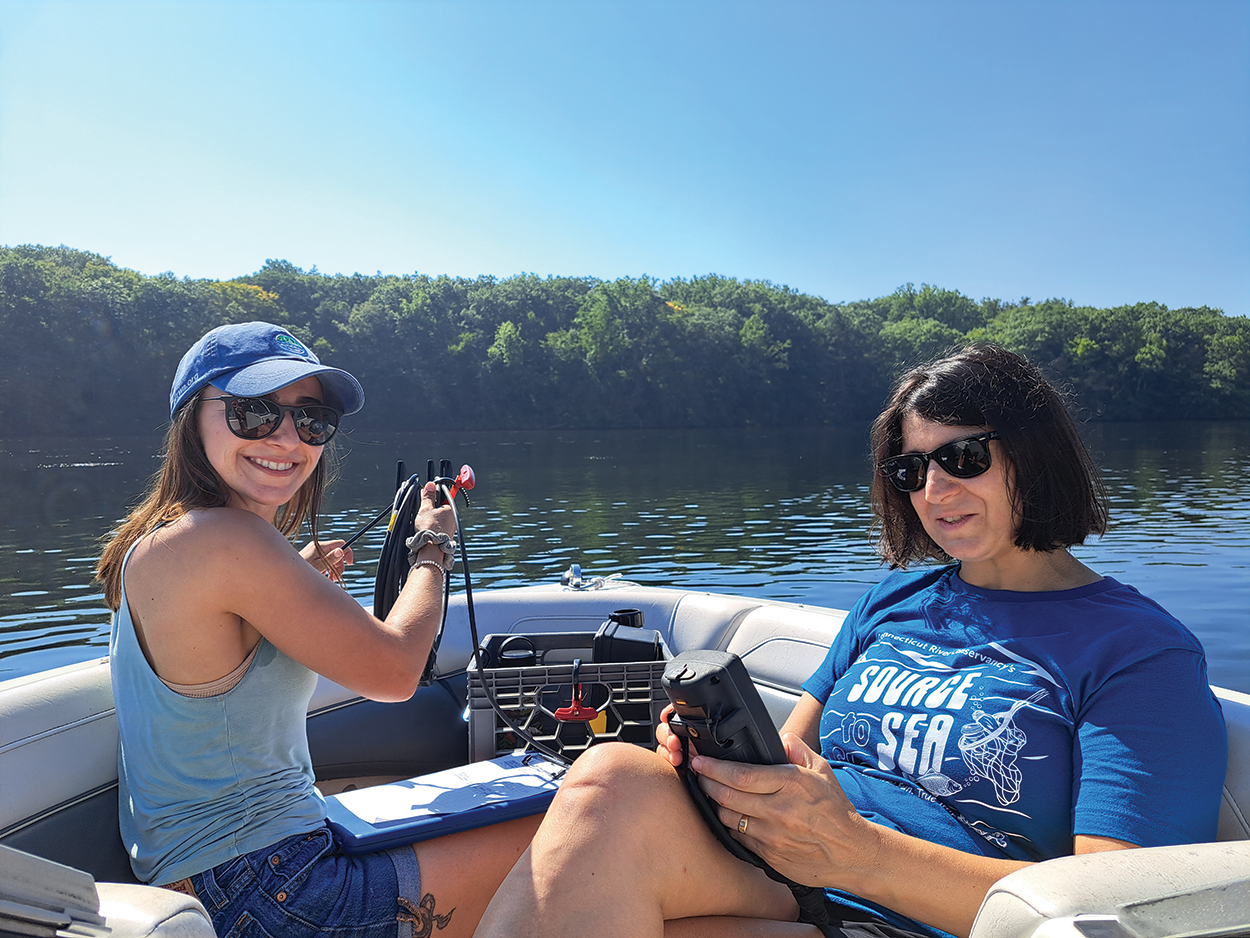
WATER QUALITY & BIOLOGICAL DIVERSITYLFSWS supported Farmington River Watershed Association through funding for Water Quality Interns for cyanobacteria research on Rainbow Reservoir, a 225-acre impoundment on the Farmington River in Windsor. In recent years, cyanobacteria blooms, which have the potential to be toxic, and affect water quality, have been reoccurring in Rainbow Reservoir, impacting theContinue reading “Cyanobacteria Research”
Stream Crossings
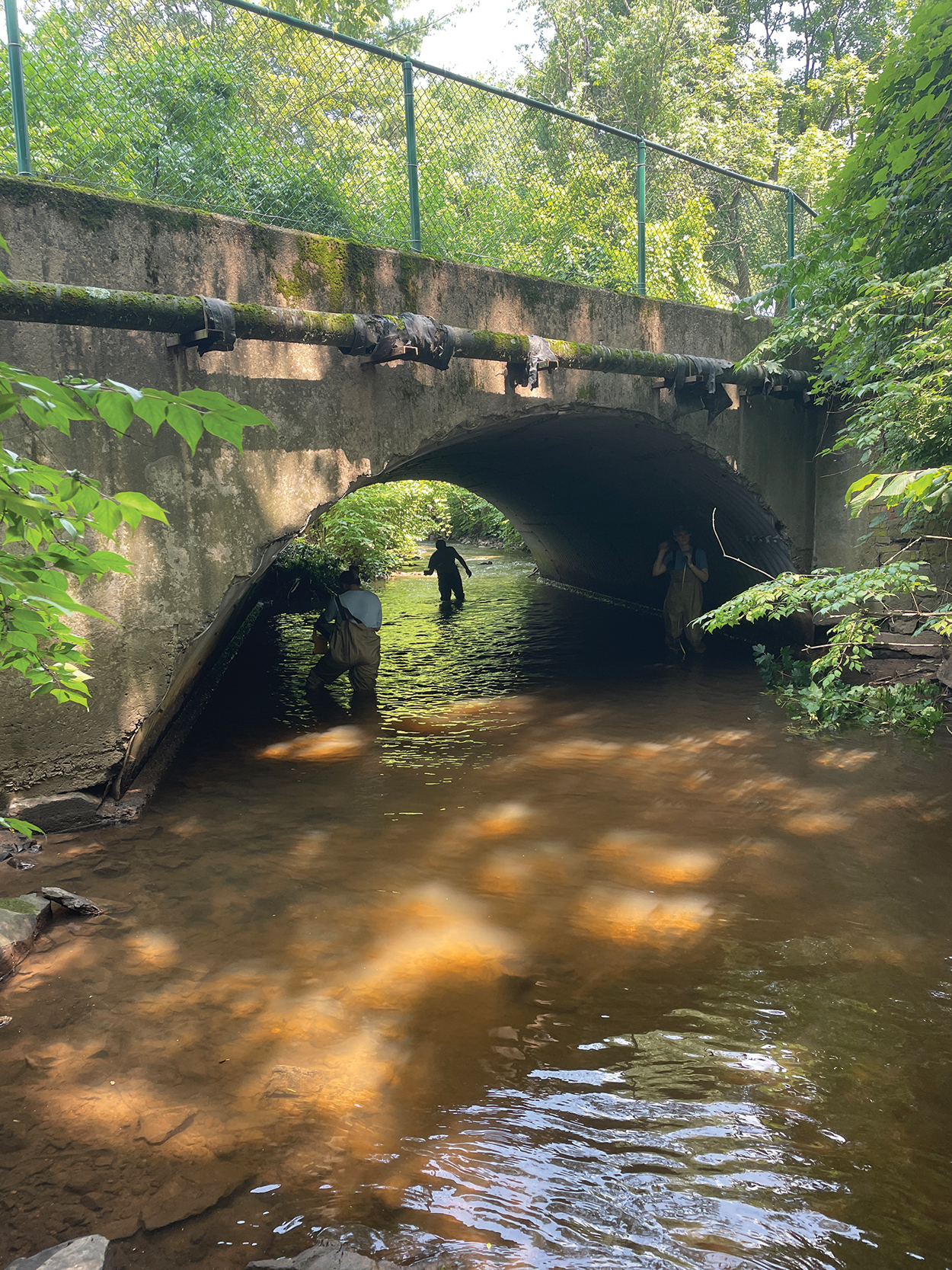
WATER QUALITY & BIOLOGICAL DIVERSITYThe Farmington River Watershed Association has been continuing work assessing stream crossing (culvert) conditions within the Farmington River Watershed in order to determine structural integrity, as well as the ability of passage for aquatic and terrestrial wildlife. Road-stream crossing assessments can be useful in determining which crossings may pose a threatContinue reading “Stream Crossings”
The Lower Farmington River & Salmon Brook Quilt Project
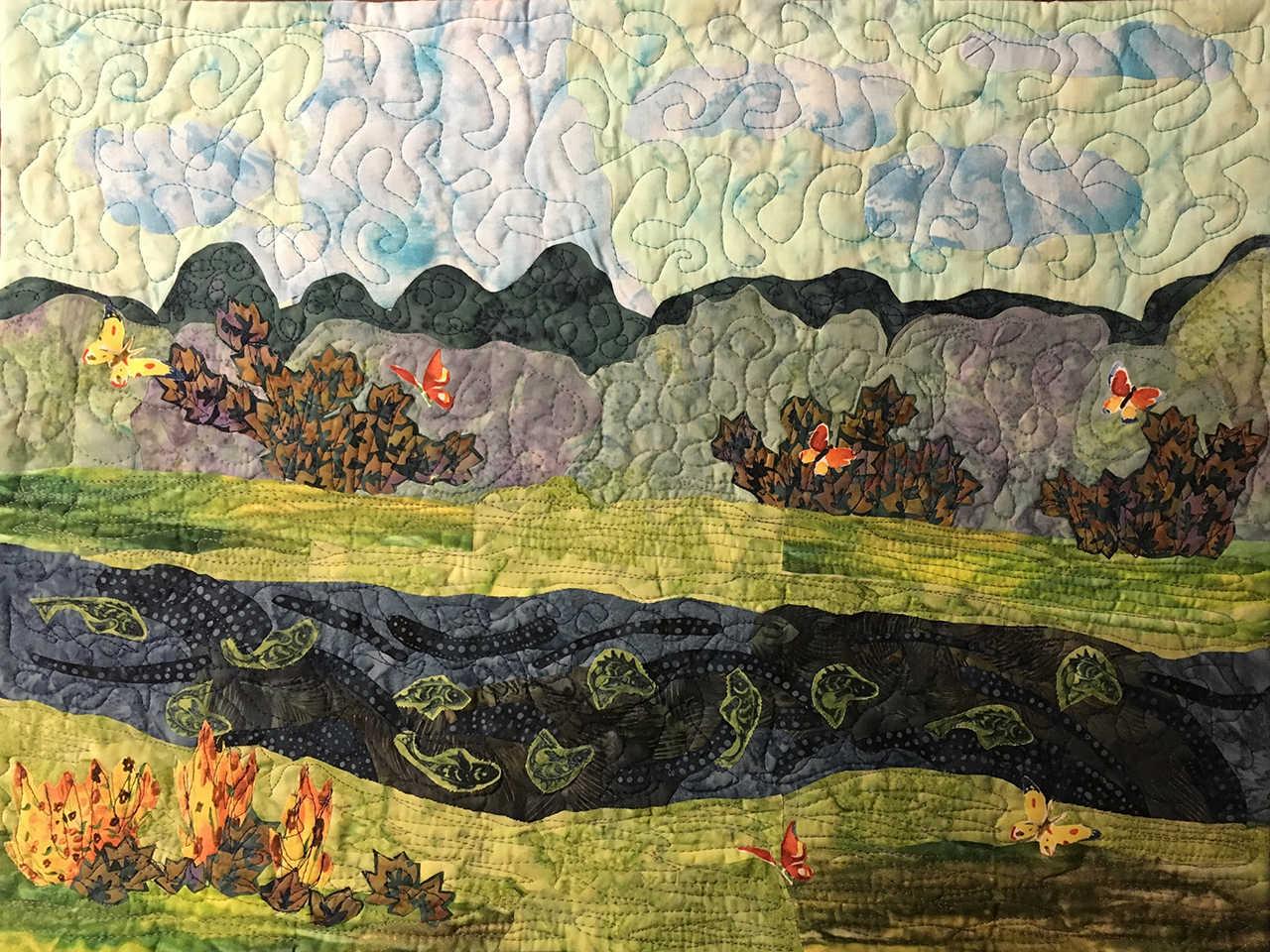
Winchester Center Congregational Church Quilt and Needle Arts Show 1 West Road Winchester Center, CT 06094 April 26th (10am-5pm) & April 27th (12pm-5pm) Winchester Center quilter, MaryPat Leger, has completed the work of art extolling the remarkable values of the Lower Farmington River and Salmon Brook. Her inspiration brought together 26 quilt artists, some nationally recognized, someContinue reading “The Lower Farmington River & Salmon Brook Quilt Project”
Conductivity
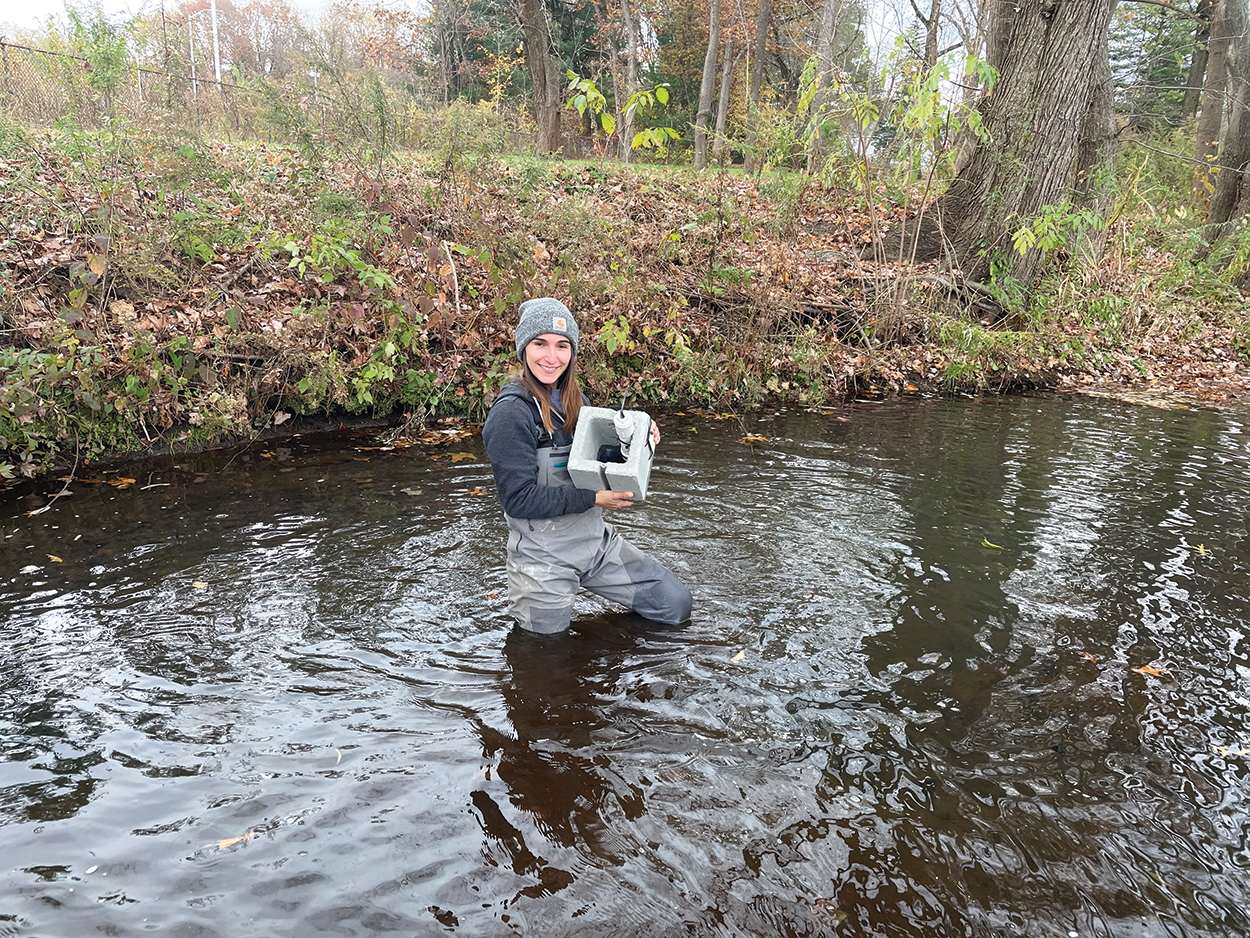
WATER QUALITY & BIOLOGICAL DIVERSITYContinuous conductivity loggers are being used by Farmington River Watershed Association to collect additional data concerning chloride contamination to determine the conditions of the Pequabuck River, Nod Brook, Roaring Brook, Owens Brook, Rainbow Brook, and Mill Brook. Due to the strong correlation between chloride and conductivity, conductivity will increase in responseContinue reading “Conductivity”
Chloride Monitoring
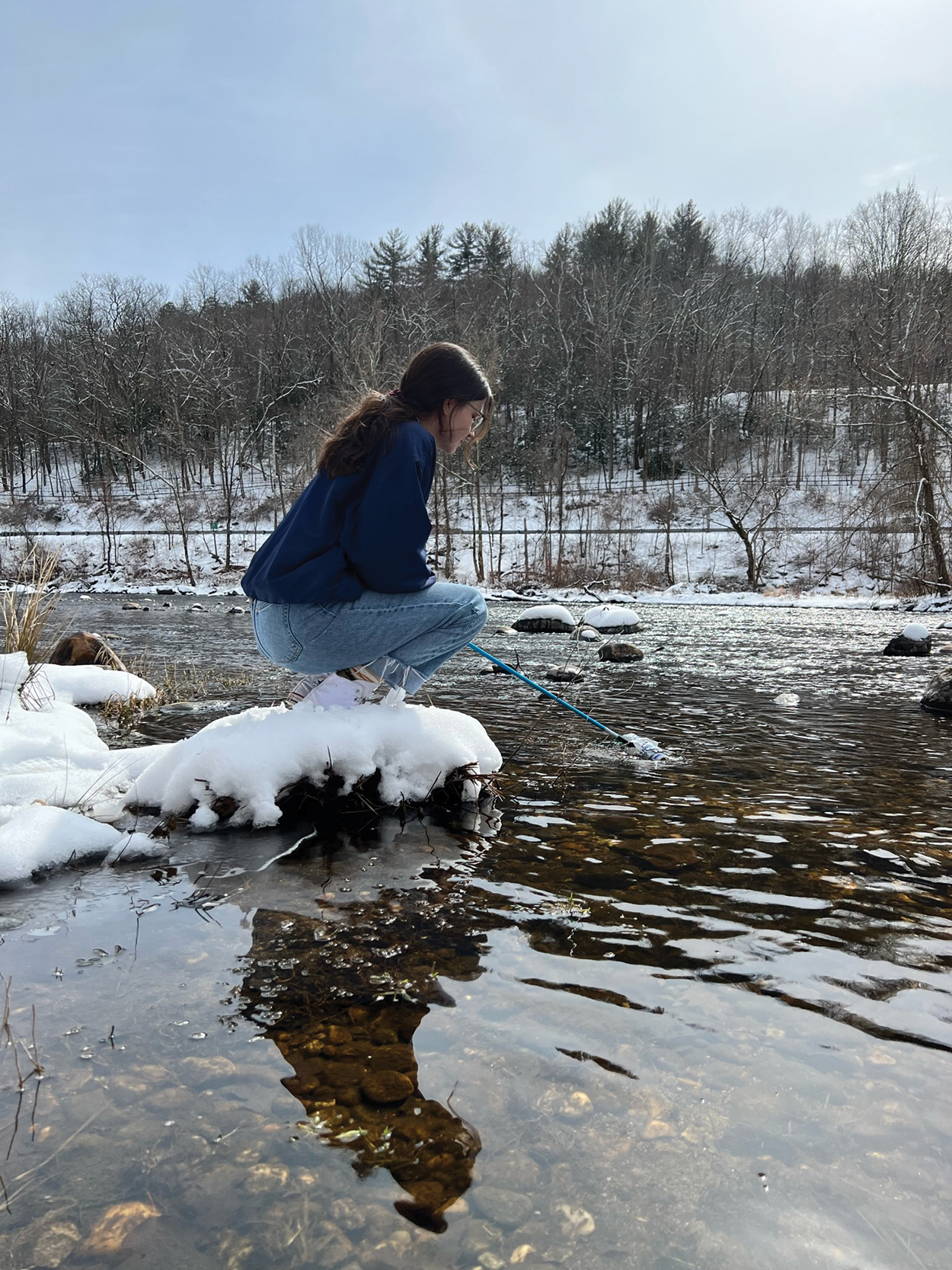
WATER QUALITY & BIOLOGICAL DIVERSITYSixteen sites were monitored for chloride in 2023. This program is in partnership with the Izaak Walton League of America (IWLA) Salt Watch program. Sites are monitored year-round to determine how locations fare throughout the year, especially in winter months when road salts are applied, and in summer during high-production timesContinue reading “Chloride Monitoring”
 Lower Farmington River and Salmon Brook Wild & Scenic