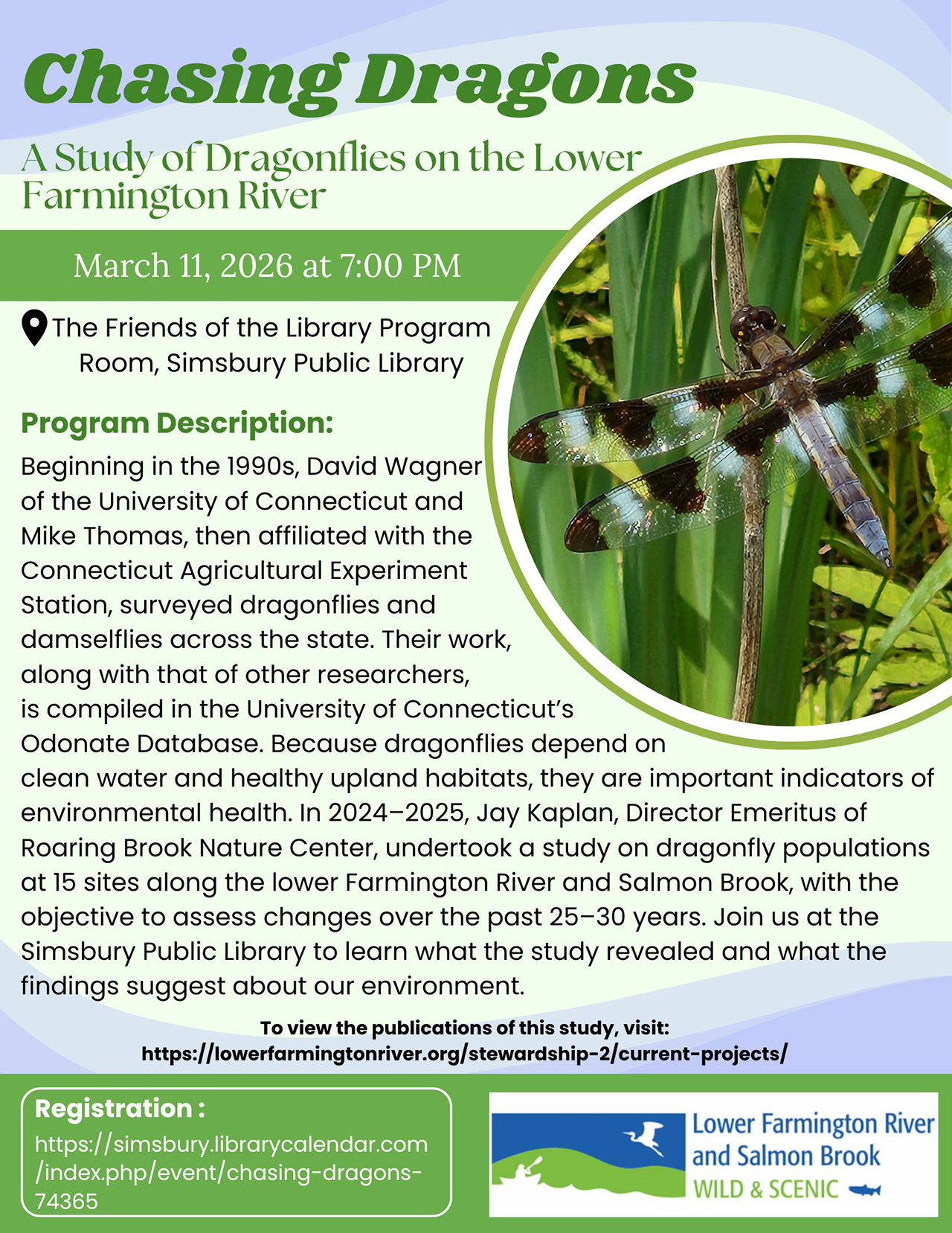
Join us for Chasing Dragons: A Study of Dragonflies on the Lower Farmington River on Wednesday, March 11, 7:00 p.m. at Simsbury Public Library. Beginning in the 1990s, David Wagner of the University of Connecticut and Mike Thomas, then affiliated with the Connecticut Agricultural Experiment Station, surveyed dragonflies and damselflies across the state. Their work,Continue reading “Chasing Dragons: A Study of Dragonflies on the Lower Farmington River”
Category Archives: Uncategorized
River Exploration Trips
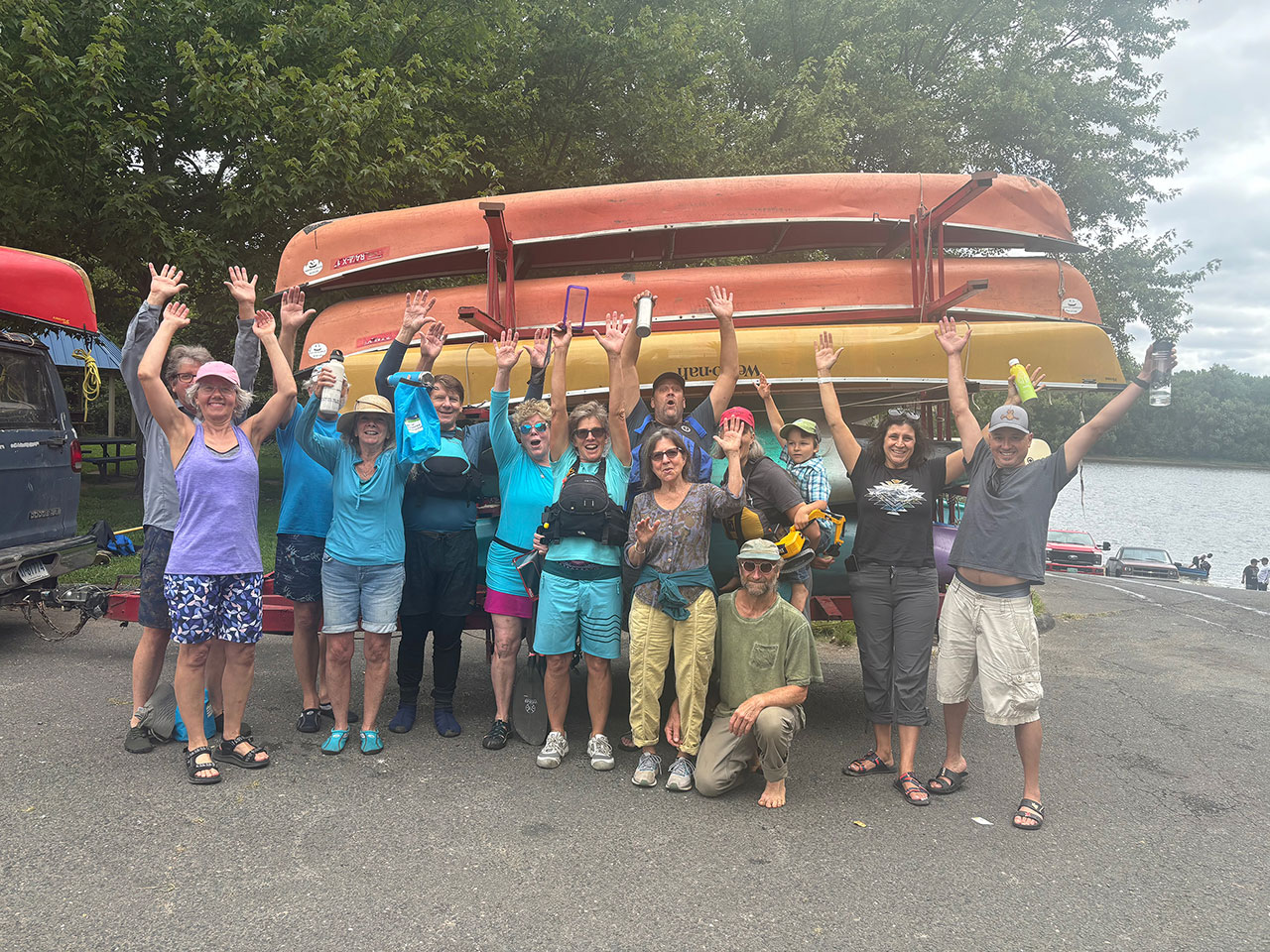
CULTURAL LANDSCAPE & RECREATIONLFSWS funded a series of flat-water paddles for the summer of 2024 to familiarize town representatives, both LFSWS members and members of the Farmington River Coordinating Committee (FRCC, the upper river Wild and Scenic group) with most of the Farmington River. The 2-hour paddling trips included river segments from Riverton to theContinue reading “River Exploration Trips”
Library Displays

CULTURAL LANDSCAPE & RECREATIONIn 2024, LFSWS decided to upgrade the displays previously shown at each designated town’s library. Each town has its own locally based display featuring information on the Lower Farmington and Salmon Brook Wild & Scenic program and the special resources relevant to the town. The new design and layout will be shownContinue reading “Library Displays”
Lower Farmington River and Salmon Brook Wild & Scenic Quilt Project

CULTURAL LANDSCAPE & RECREATIONTo raise interest and appreciation of the outstanding resources of the lower Farmington River and Salmon Brook, LFSWS funded the development of a series of quilts which resulted in an extension of the upper Farmington River’s “Farmington River Quilt Project.” MaryPat Leger organized a group of 26 quilt artists, including herself, toContinue reading “Lower Farmington River and Salmon Brook Wild & Scenic Quilt Project”
Lower Farmington River and Salmon Brook Recreational Uses Study
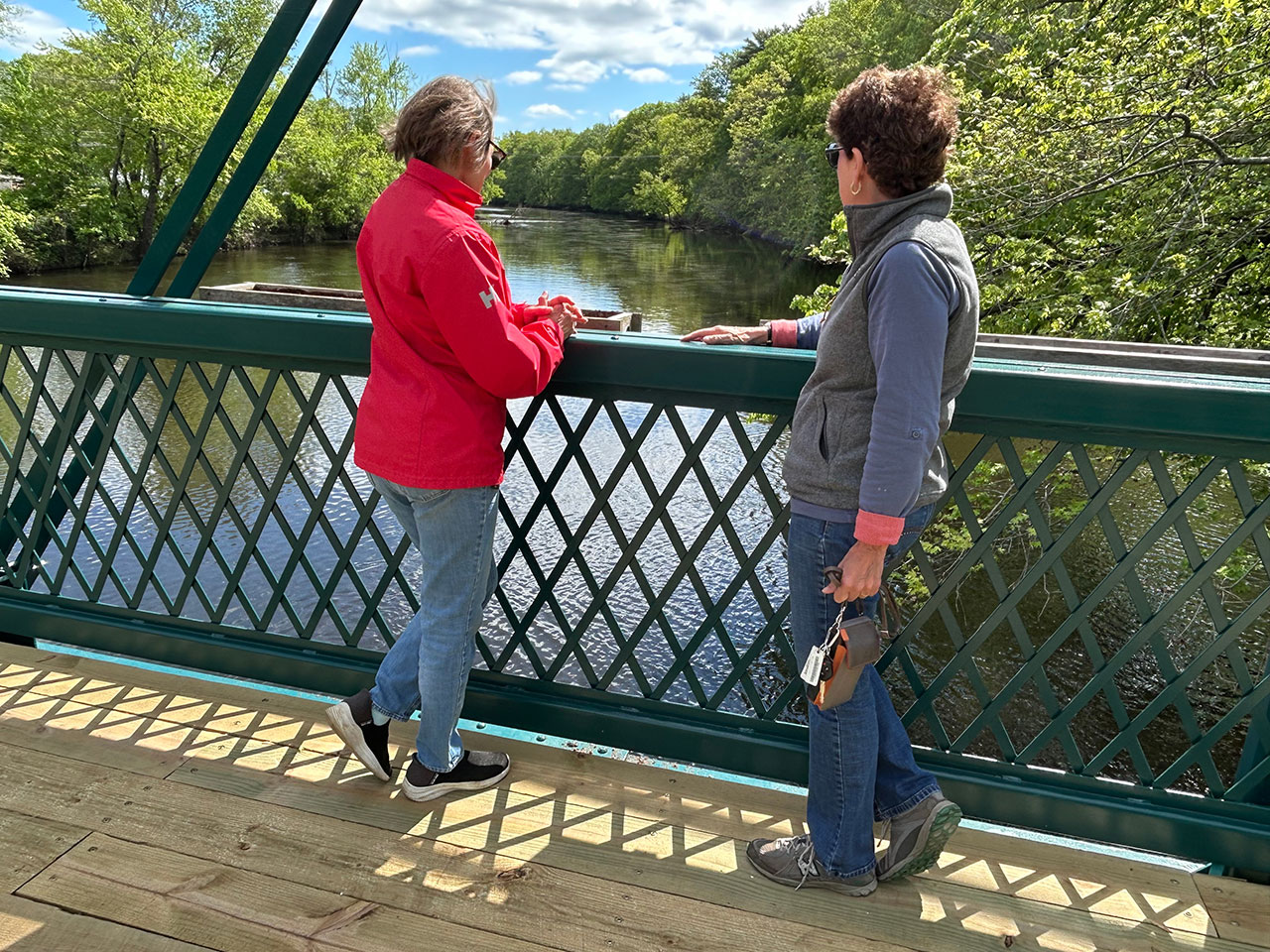
CULTURAL LANDSCAPE & RECREATIONThis year LFSWS funded informational panels for three kiosks. The three kiosks, one for Berg Field in Hartland and two for Avon, one in Alsop Meadow and one near the river at the Tillotson Road parking area, were prefabricated in 2022. They were installed in 2024 after the panels were designed andContinue reading “Lower Farmington River and Salmon Brook Recreational Uses Study”
McLean Game Refuge Archaeology Project
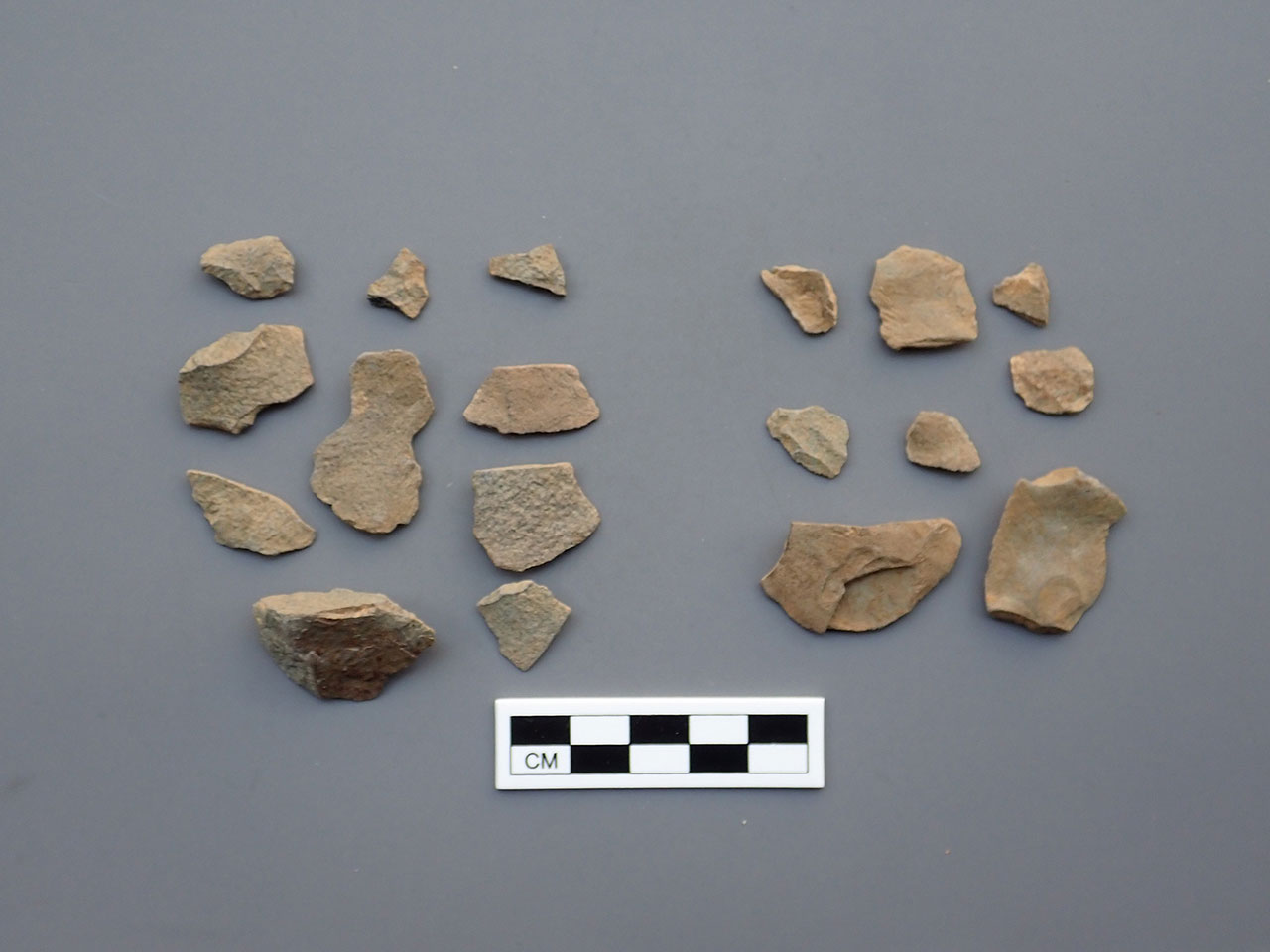
CULTURAL LANDSCAPE & RECREATIONThe Mclean Game Refuge has been a site of small-scale archaeology studies since the 1990s because of the strong evidence of the land’s use by native Americans. In support of a continued effort to learn more about native American use of the game refuge’s land, LFSWS provided funding to McLean for itsContinue reading “McLean Game Refuge Archaeology Project”
Kiosk Panels

CULTURAL LANDSCAPE & RECREATIONThis year LFSWS funded informational panels for three kiosks. The three kiosks, one for Berg Field in Hartland and two for Avon, one in Alsop Meadow and one near the river at the Tillotson Road parking area, were prefabricated in 2022. They were installed in 2024 after the panels were designed andContinue reading “Kiosk Panels”
East Granby Middle School Fish Release Program
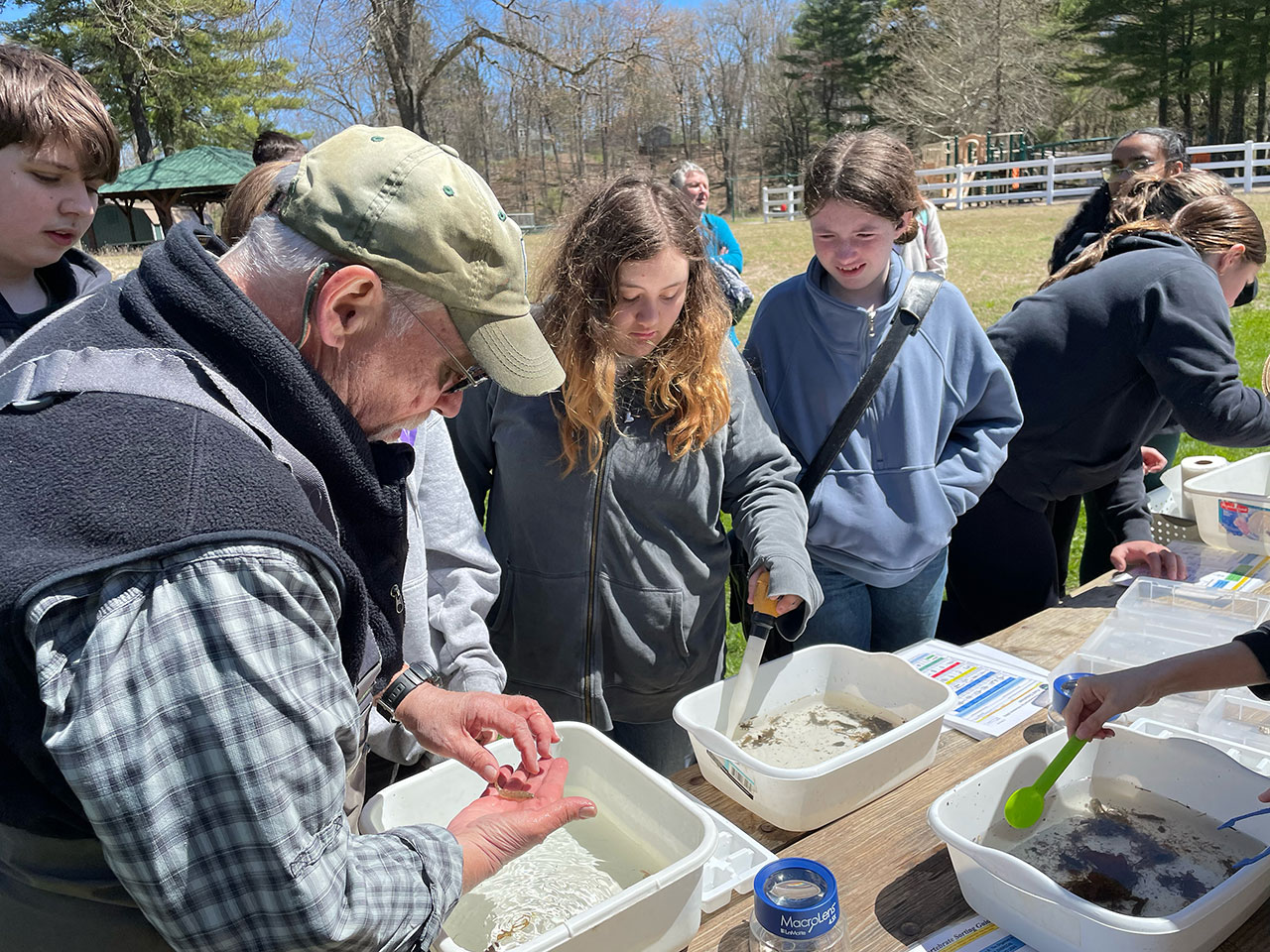
WATER QUALITY & BIOLOGICAL DIVERSITYLFSWS again supported the participation of the 8th grade at East Granby Middle School in Trout Unlimited’s program, “Trout in the Classroom.” Students, with their teacher’s guidance, raised the fish from eggs in the classroom. Because the “chiller,” which is essential for maintaining the cold-water temperature trout require, was failing, theContinue reading “East Granby Middle School Fish Release Program”
Botanical Surveys
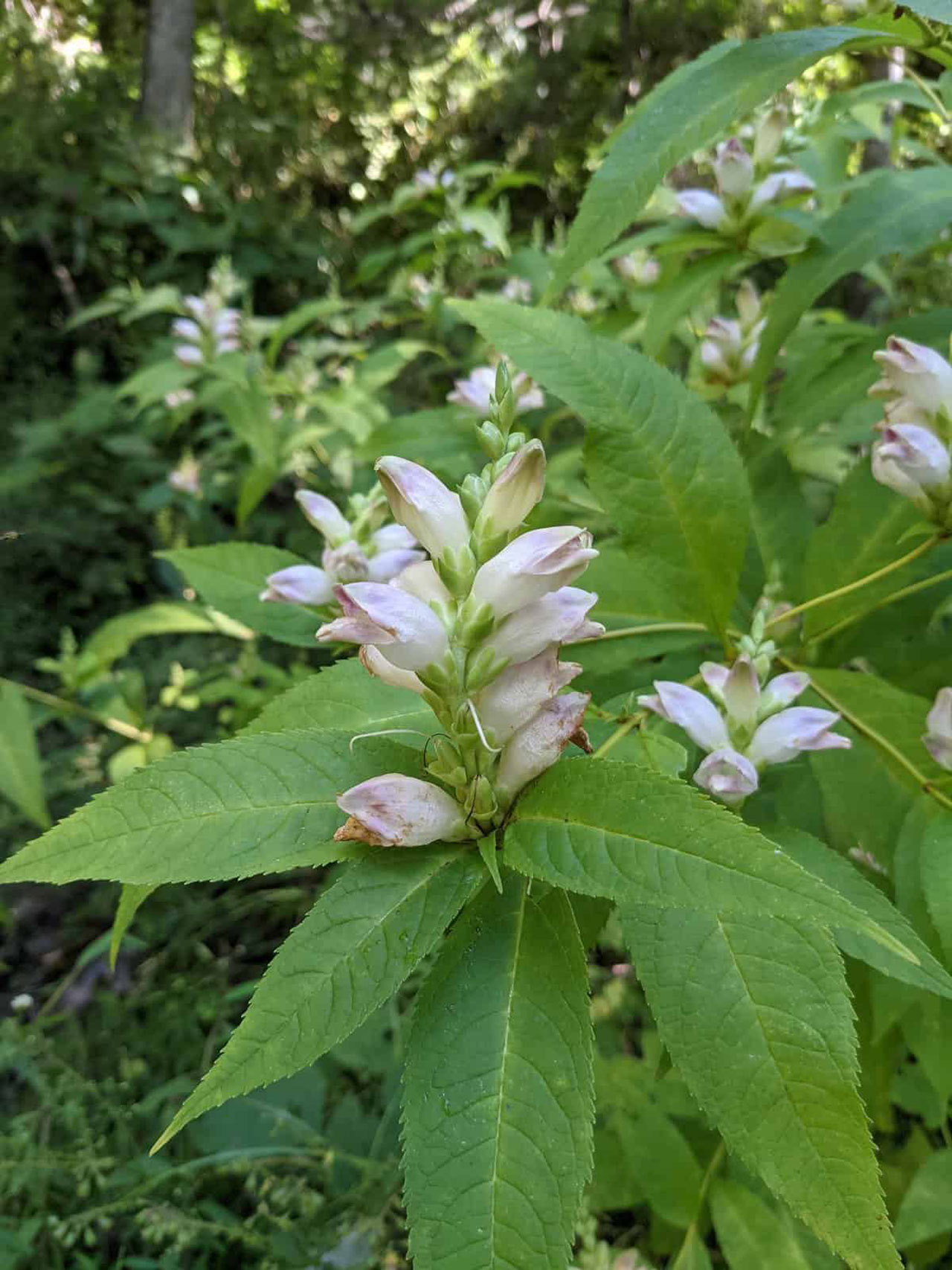
WATER QUALITY & BIOLOGICAL DIVERSITYBryan Connolly, Associate Professor of Botany at Eastern Connecticut State University, conducted surveys of vascular plants in Nod Brook Wildlife Management Area (NBWMA) located in both Avon and Simsbury and also in Simsbury Wildlife Management Area (SWMA) and in Simsbury’s Tariffville Park. The surveys documented native species, including rare plants andContinue reading “Botanical Surveys”
Survey of Odonates (Dragonflies & Damselflies)

WATER QUALITY & BIOLOGICAL DIVERSITY “Changes in the Composition of Odonata (Dragonflies and Damselflies) Utilizing the Lower Farmington River/Salmon Brook Wild and Scenic Area” In the spring and summer of 2024, Jay Kaplan, Co-Director of Roaring Brook Nature Center, led a survey of Odonates (dragonflies and damselflies) at fifteen sites along the lower Farmington RiverContinue reading “Survey of Odonates (Dragonflies & Damselflies)”
 Lower Farmington River and Salmon Brook Wild & Scenic