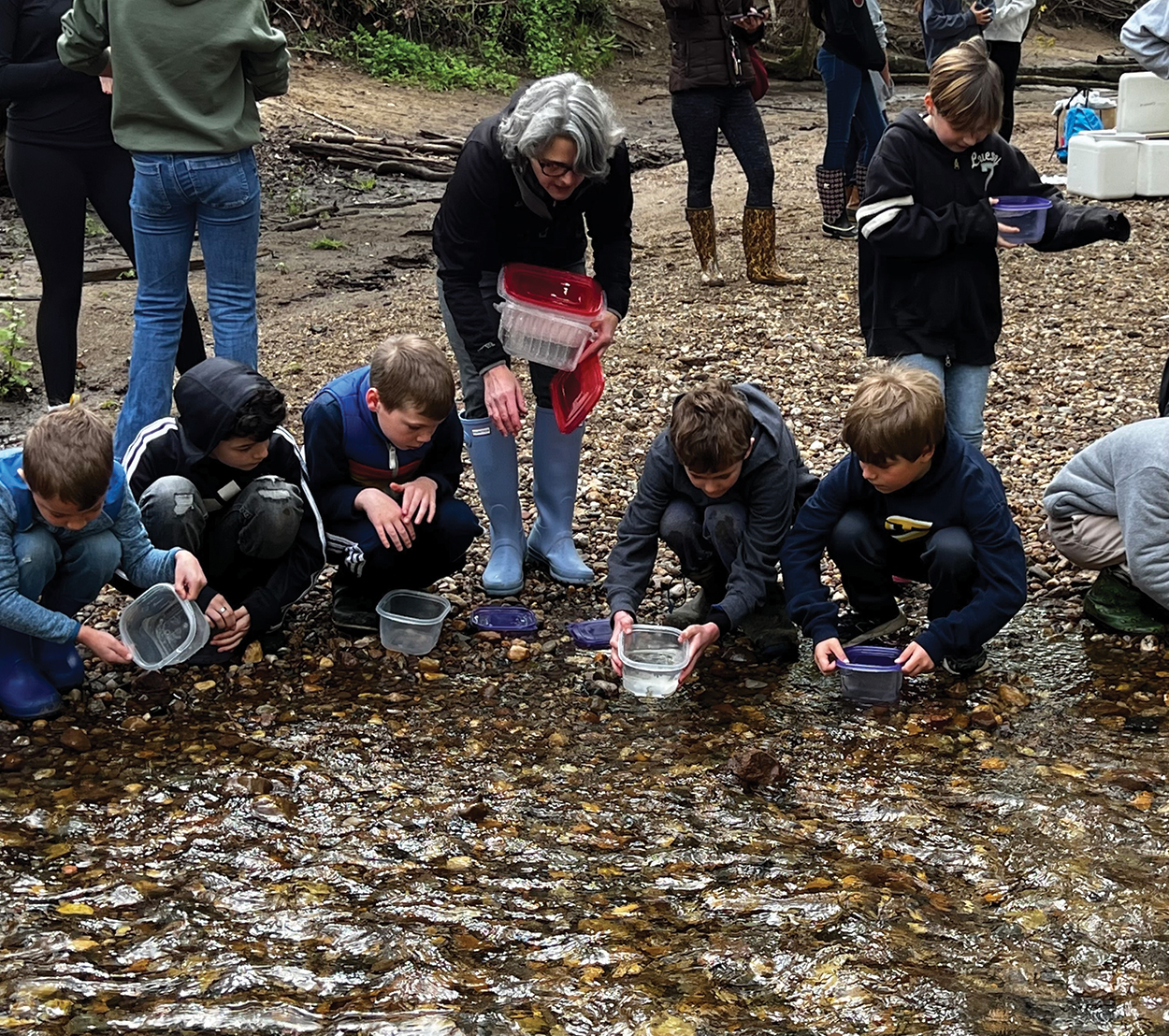
WATER QUALITY & BIOLOGICAL DIVERSITYLFSWS funded a grant to enhance the Salmon in Schools program. The grant provided for the purchase of a new chiller to maintain an appropriate temperature for raising the salmon and also supported other parts of the program. Hartland School 6th grade students raised Atlantic salmon in the classroom, which wereContinueContinue reading “Hartland Middle School Salmon in Schools”
Category Archives: Uncategorized
East Granby Middle School Fish Release
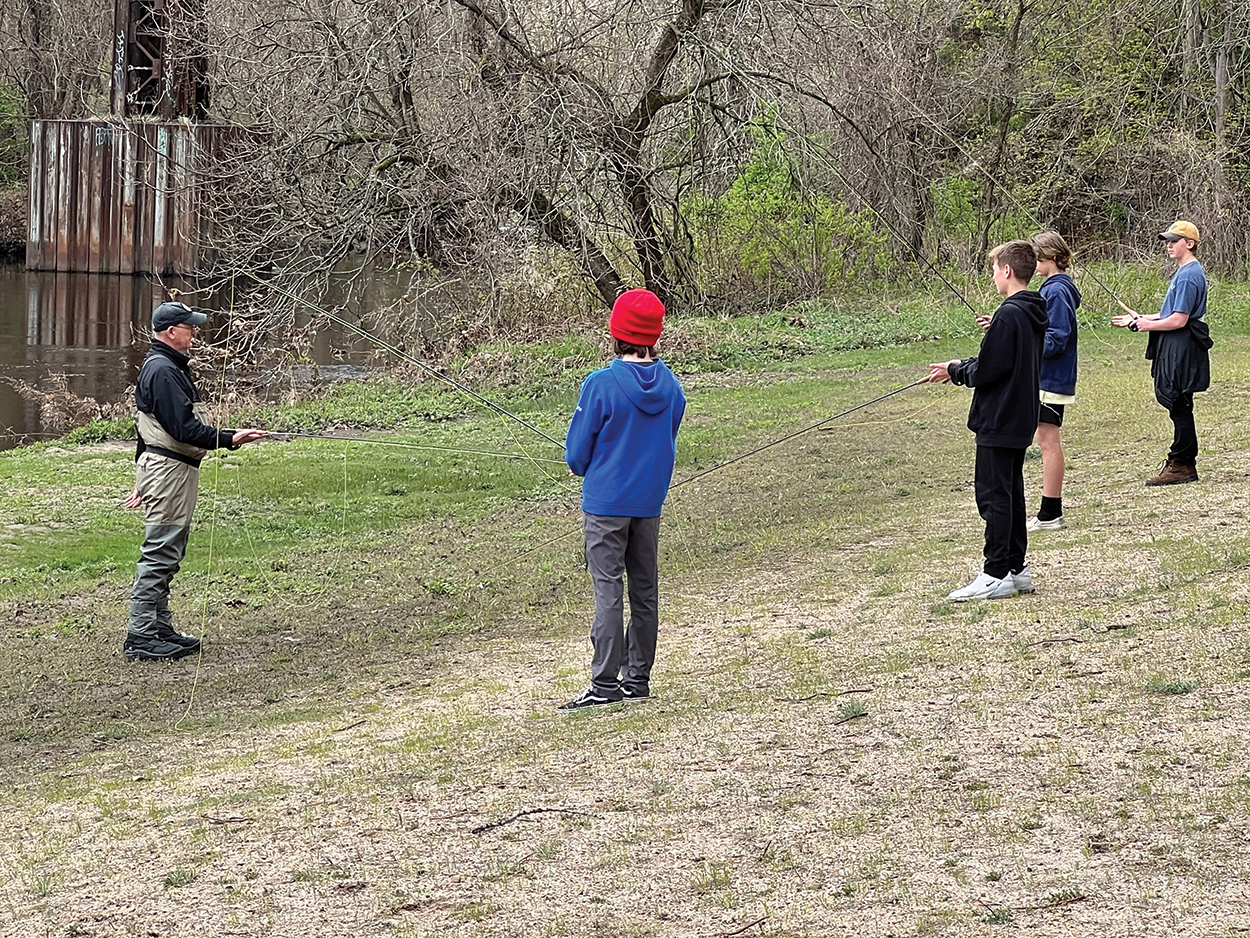
WATER QUALITY & BIOLOGICAL DIVERSITYLFSWS funded a grant to support an 8th grade field trip to release Atlantic salmon and brown trout into Salmon Brook. The students spent the winter raising the fish from eyed eggs in the classroom, and by late April they were ready for release. This annual field trip combined the fishContinueContinue reading “East Granby Middle School Fish Release”
Engineering Study for Salmon Brook Pedestrian Bridge Replacement
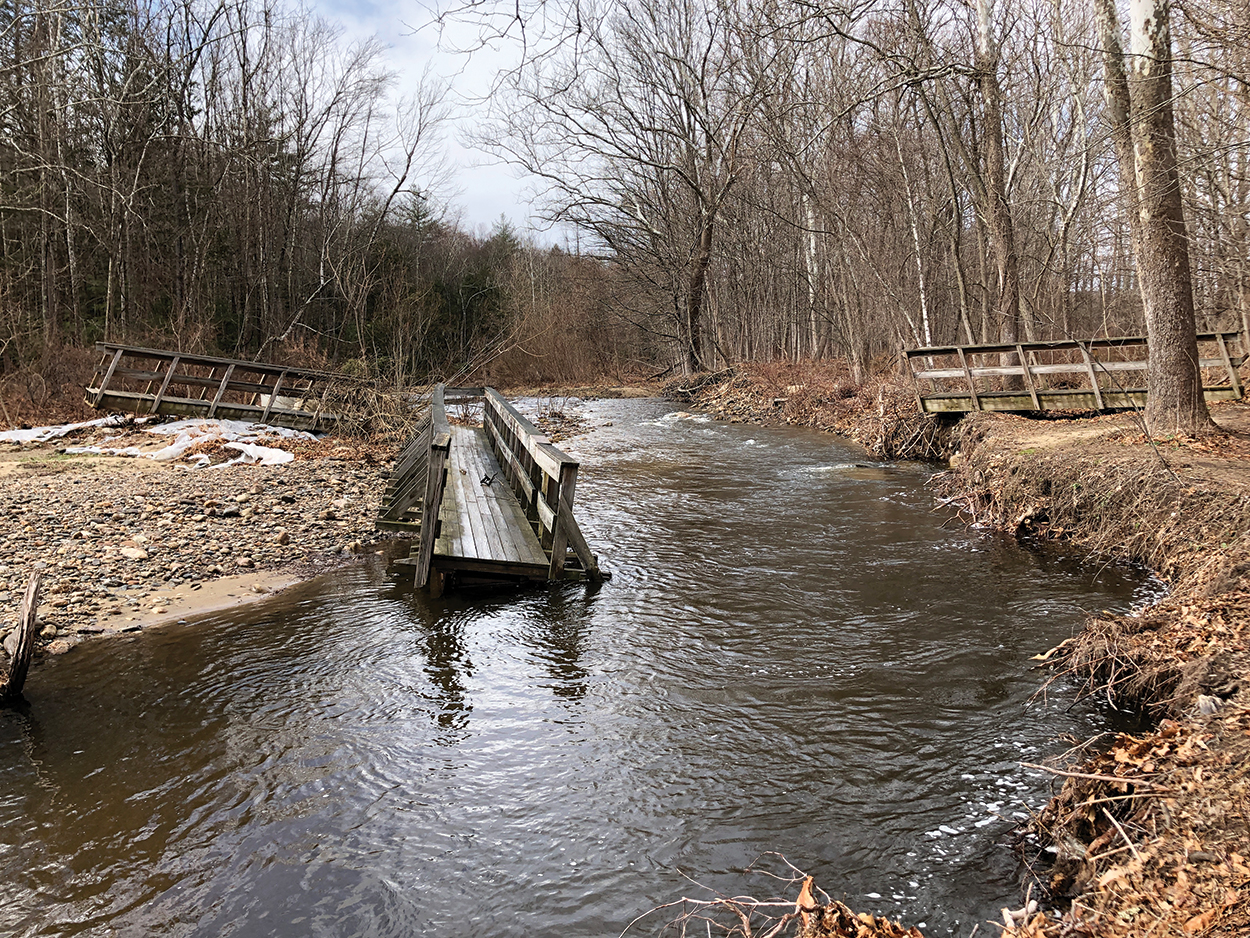
WATER QUALITY & BIOLOGICAL DIVERSITYIn October 2021, a storm washed out the pedestrian bridge at the town-owned Holcomb Farm which had provided access to the farm property west of the bridge and its very popular trail network. Both the Friends of Holcomb Farm and the Town of Granby wanted access to the land restored andContinueContinue reading “Engineering Study for Salmon Brook Pedestrian Bridge Replacement”
Pinchot Sycamore Park Invasive Control
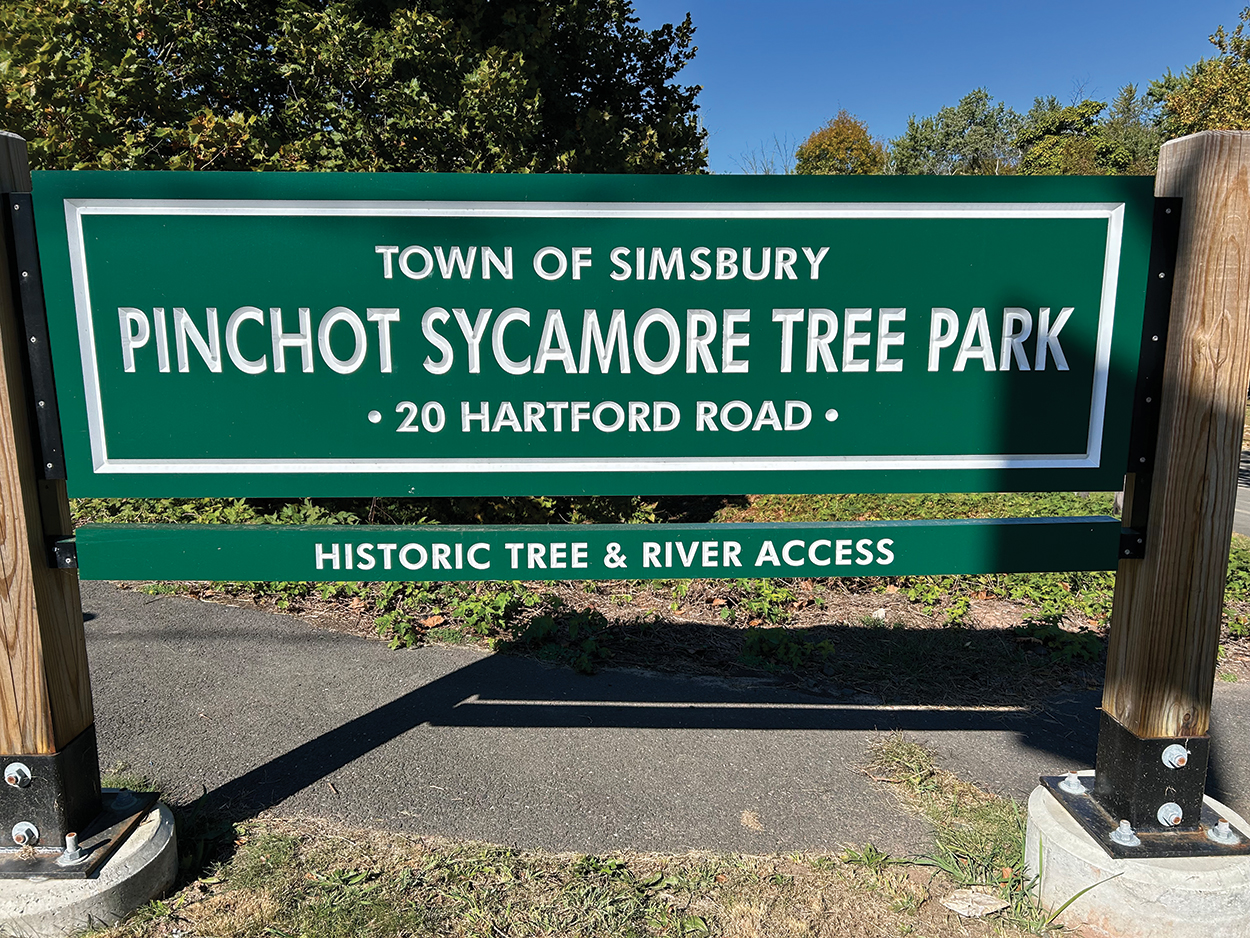
WATER QUALITY & BIOLOGICAL DIVERSITYSimsbury is the home of the Pinchot Sycamore, the largest Tree in CT. It is located in a small town park on the Farmington River, where a bridge on the heavily traveled Route 185 crosses the river. The tree is named in honor of Gifford Pinchot, who was born in SimsburyContinueContinue reading “Pinchot Sycamore Park Invasive Control”
Invasive Water Chestnut Pulls
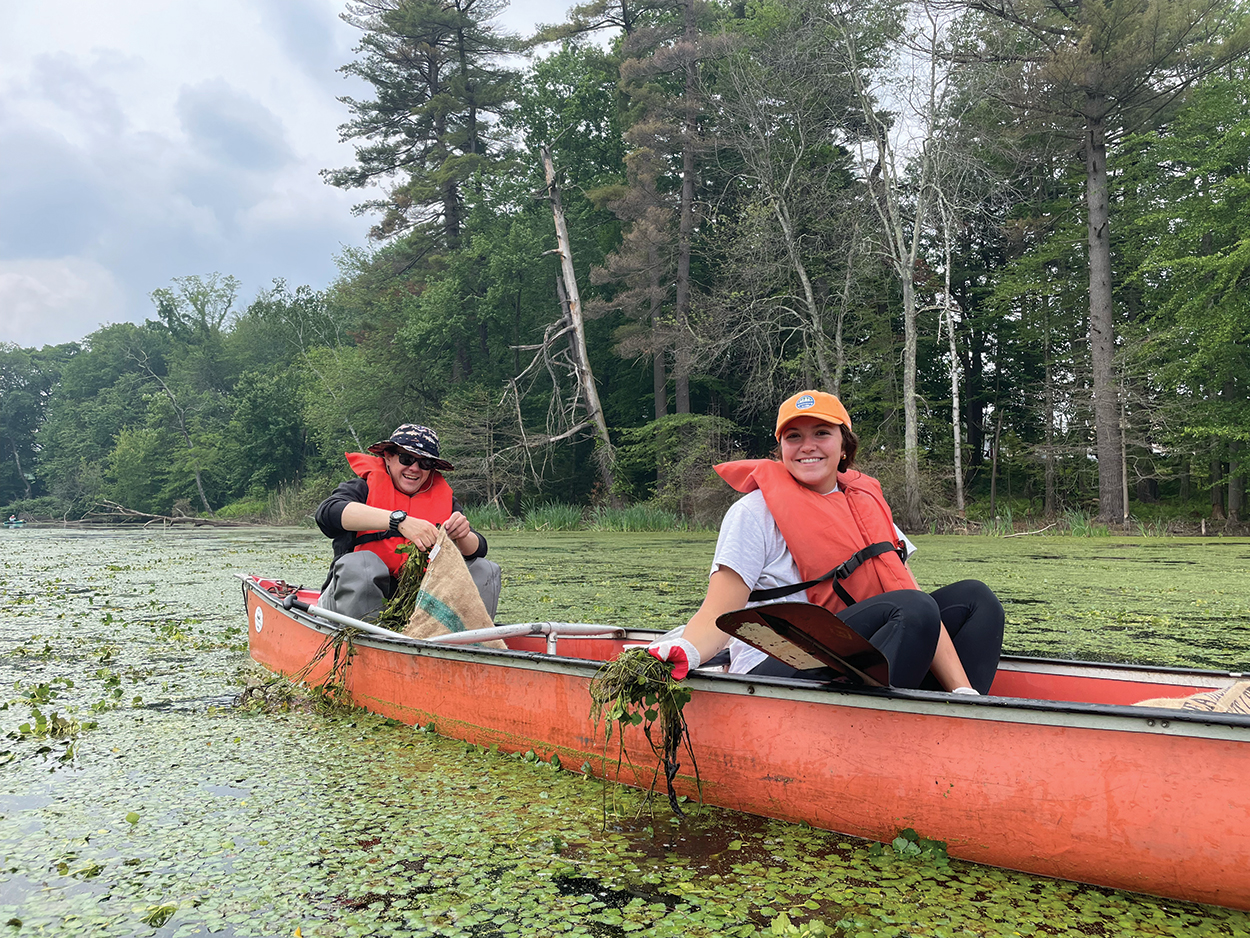
WATER QUALITY & BIOLOGICAL DIVERSITYLFSWS funded The Farmington River Watershed Association’s effort to carry out a series of invasive water chestnut removals on Barber’s Pond in Bloomfield, CT. Invasive water chestnut is an issue in many areas of the CT River watershed, and so far has only been reported in the Farmington River watershed inContinueContinue reading “Invasive Water Chestnut Pulls”
Hemlock Woolly Adelgid Control

WATER QUALITY & BIOLOGICAL DIVERSITYThis year, LFSWS funded the Farmington River Watershed Association’s purchase of 10,000 S. tsugae for release as a biological control of the invasive hemlock woolly adelgid (HWA) in the lower Farmington River and Salmon Brook watershed. HWA is an invasive aphid-like insect that attacks North American hemlock trees. They can beContinueContinue reading “Hemlock Woolly Adelgid Control”
CT Green Snow Pro Training
WATER QUALITY & BIOLOGICAL DIVERSITYLFSWS supported funding for the lower Farmington River and Salmon Brook Wild and Scenic town employees and elected officials to attend the CT Green Snow Pro training. This training is offered by the T2 Center at UCONN. It provides resources on how to use road salt more effectively in order toContinueContinue reading “CT Green Snow Pro Training”
Cyanobacteria Research
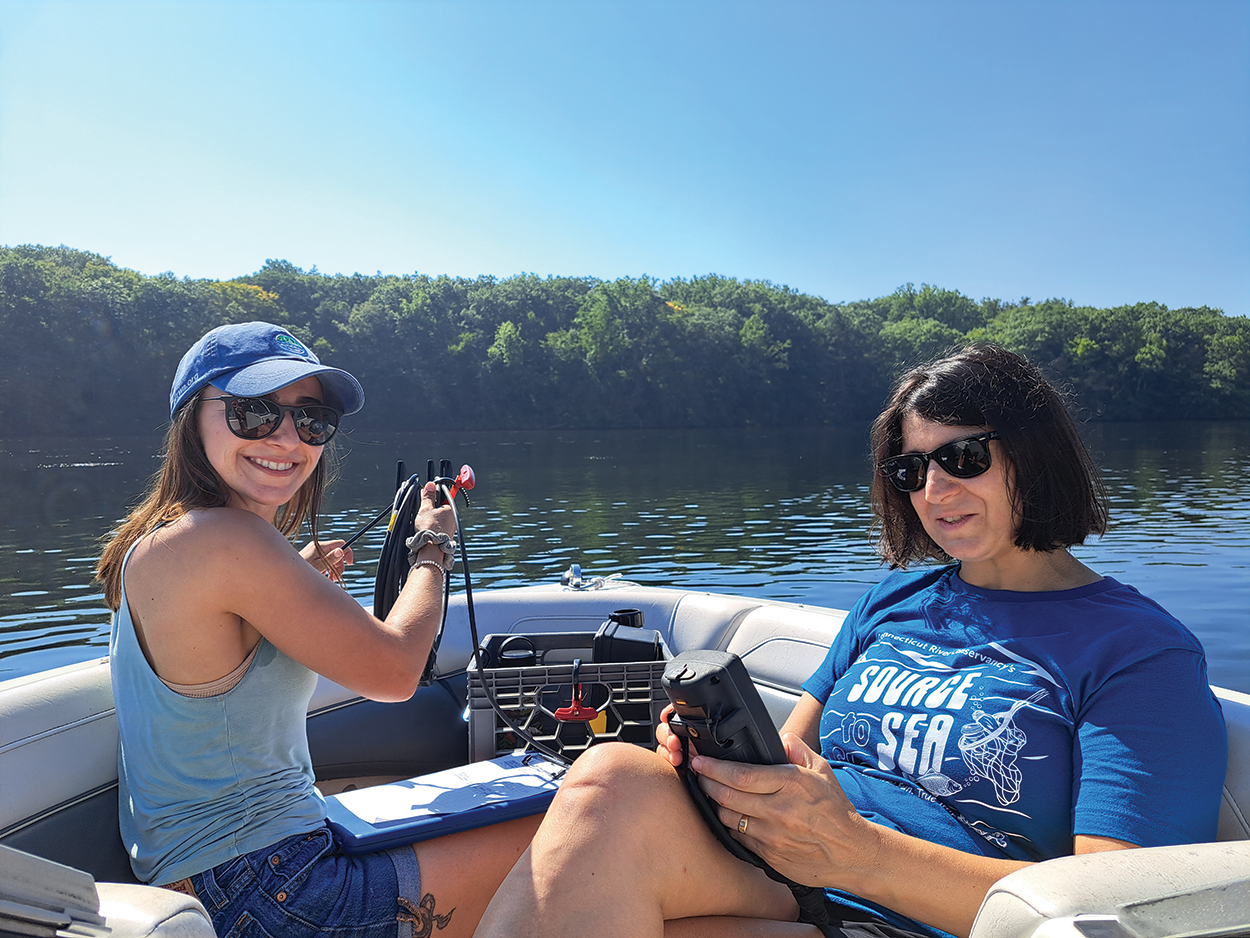
WATER QUALITY & BIOLOGICAL DIVERSITYLFSWS supported Farmington River Watershed Association through funding for Water Quality Interns for cyanobacteria research on Rainbow Reservoir, a 225-acre impoundment on the Farmington River in Windsor. In recent years, cyanobacteria blooms, which have the potential to be toxic, and affect water quality, have been reoccurring in Rainbow Reservoir, impacting theContinueContinue reading “Cyanobacteria Research”
Stream Crossings
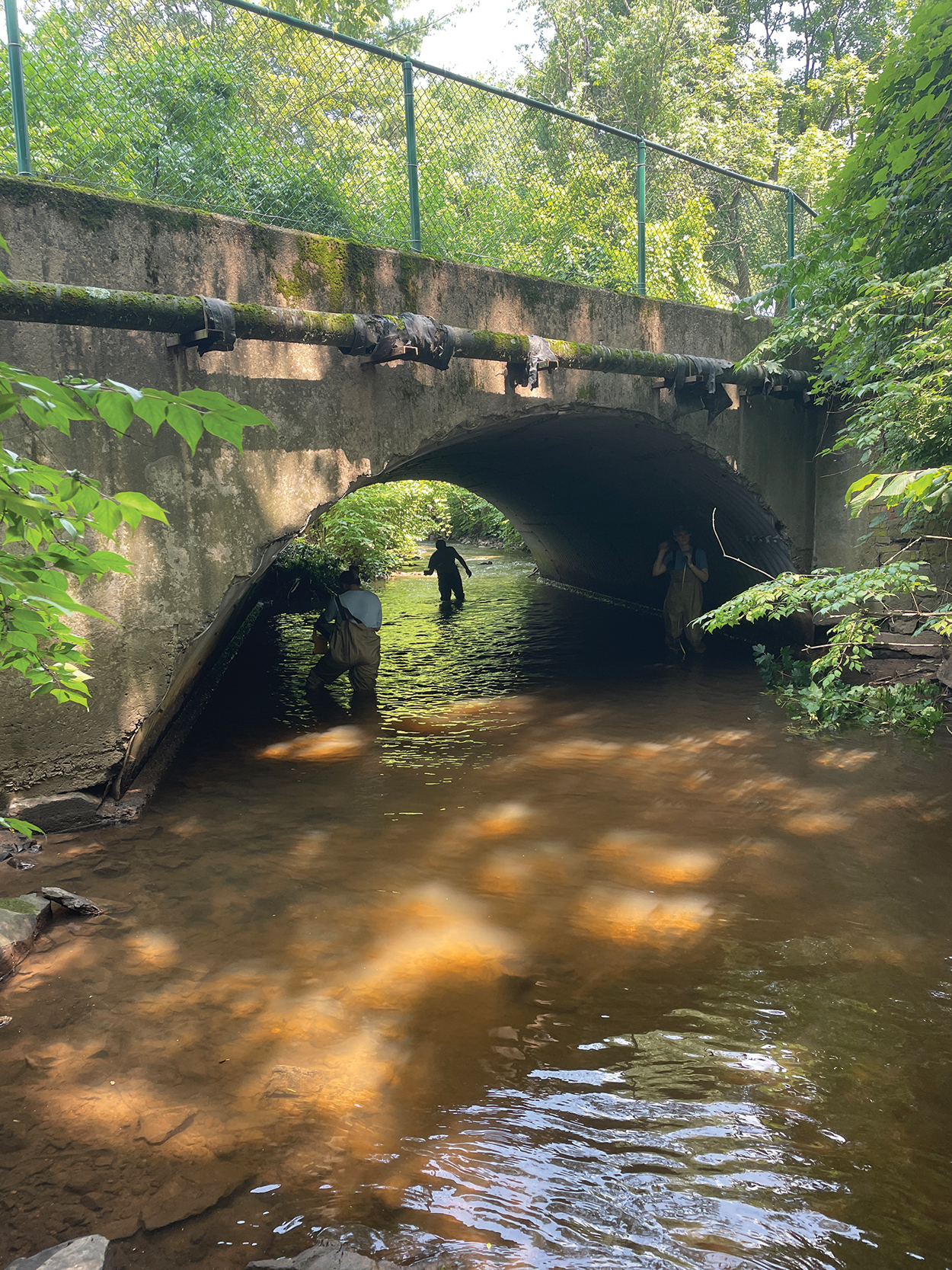
WATER QUALITY & BIOLOGICAL DIVERSITYThe Farmington River Watershed Association has been continuing work assessing stream crossing (culvert) conditions within the Farmington River Watershed in order to determine structural integrity, as well as the ability of passage for aquatic and terrestrial wildlife. Road-stream crossing assessments can be useful in determining which crossings may pose a threatContinueContinue reading “Stream Crossings”
The Lower Farmington River & Salmon Brook Quilt Project
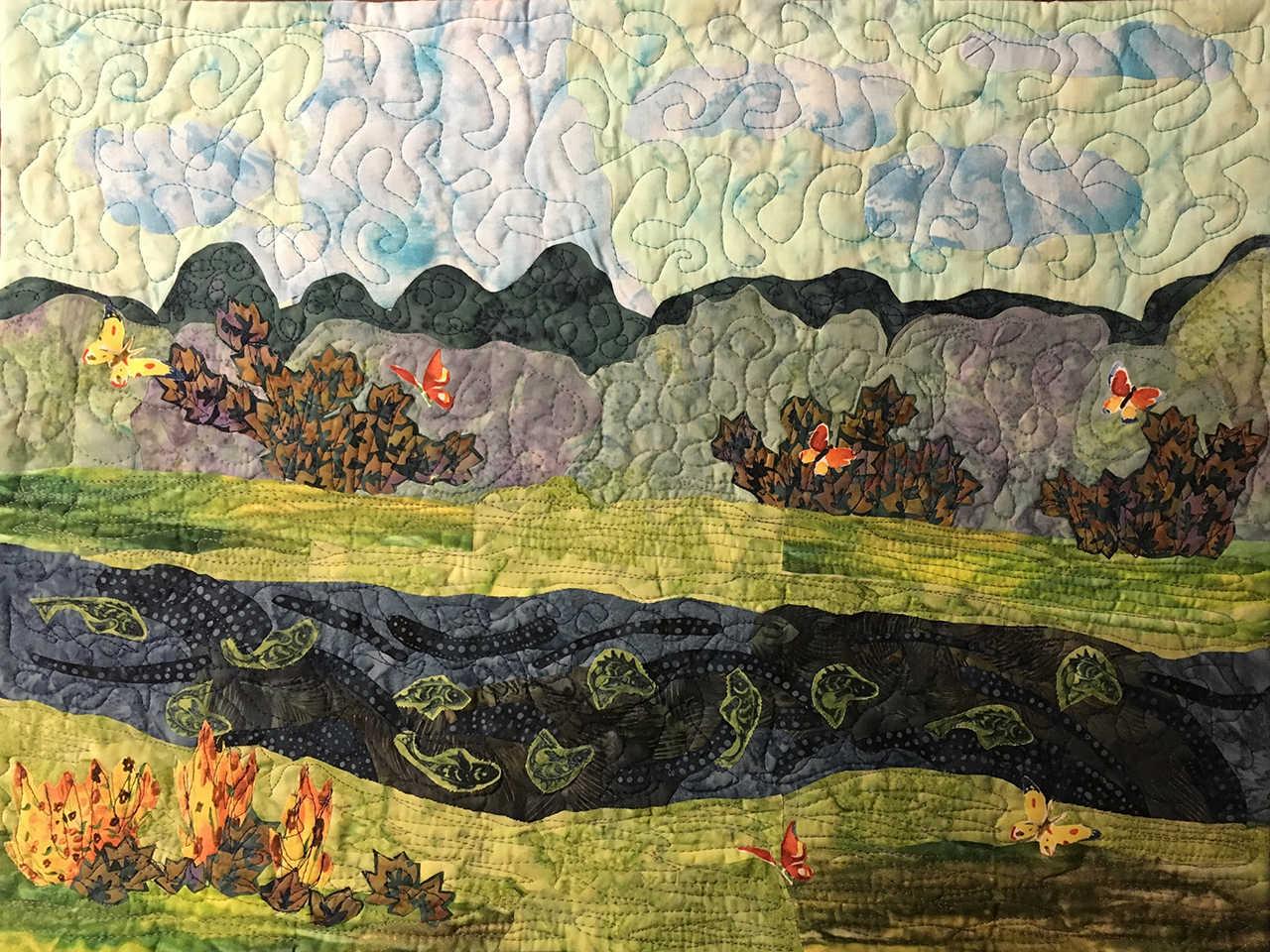
Winchester Center Congregational Church Quilt and Needle Arts Show 1 West Road Winchester Center, CT 06094 April 26th (10am-5pm) & April 27th (12pm-5pm) Winchester Center quilter, MaryPat Leger, has completed the work of art extolling the remarkable values of the Lower Farmington River and Salmon Brook. Her inspiration brought together 26 quilt artists, some nationally recognized, someContinueContinue reading “The Lower Farmington River & Salmon Brook Quilt Project”
Conductivity
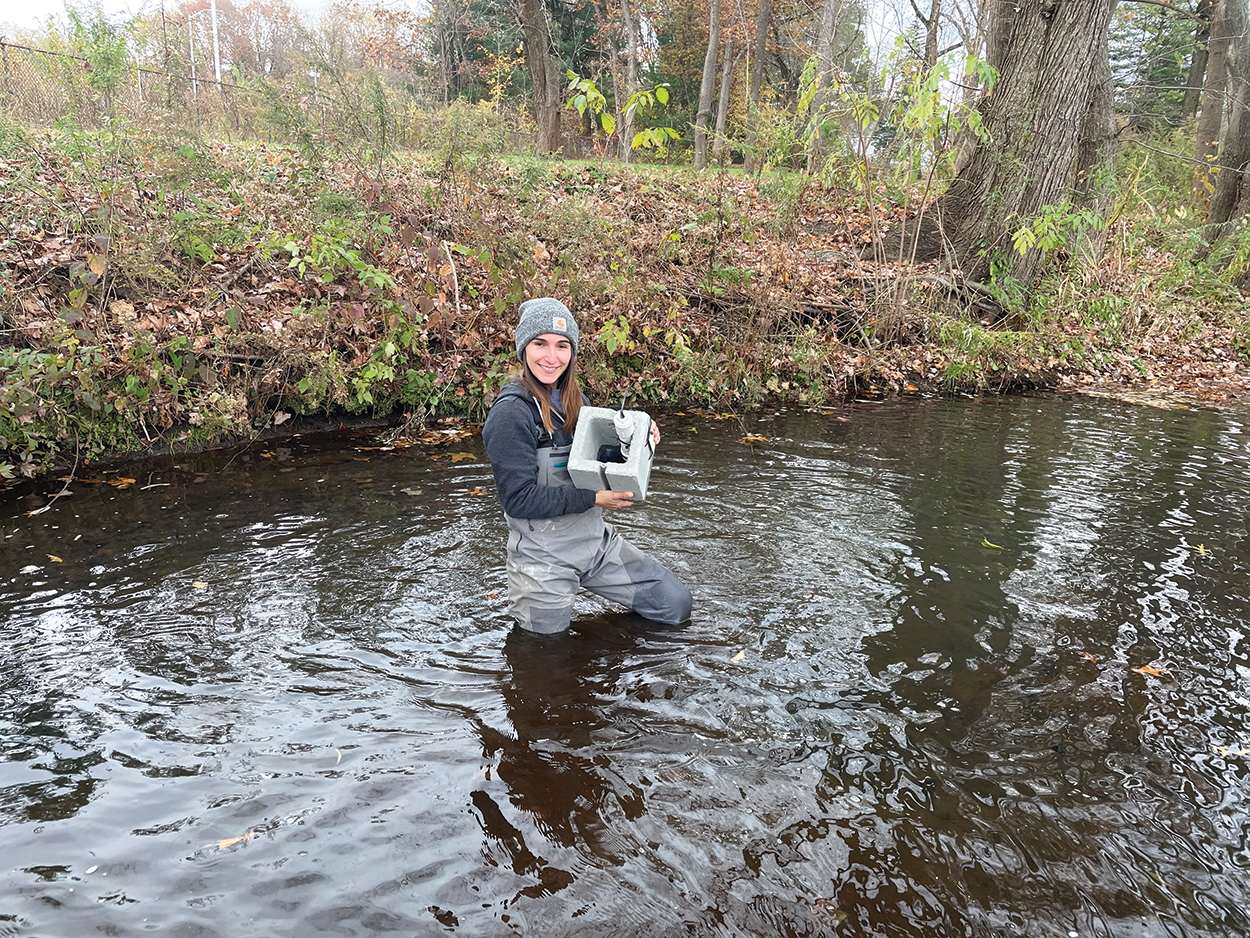
WATER QUALITY & BIOLOGICAL DIVERSITYContinuous conductivity loggers are being used by Farmington River Watershed Association to collect additional data concerning chloride contamination to determine the conditions of the Pequabuck River, Nod Brook, Roaring Brook, Owens Brook, Rainbow Brook, and Mill Brook. Due to the strong correlation between chloride and conductivity, conductivity will increase in responseContinueContinue reading “Conductivity”
Chloride Monitoring
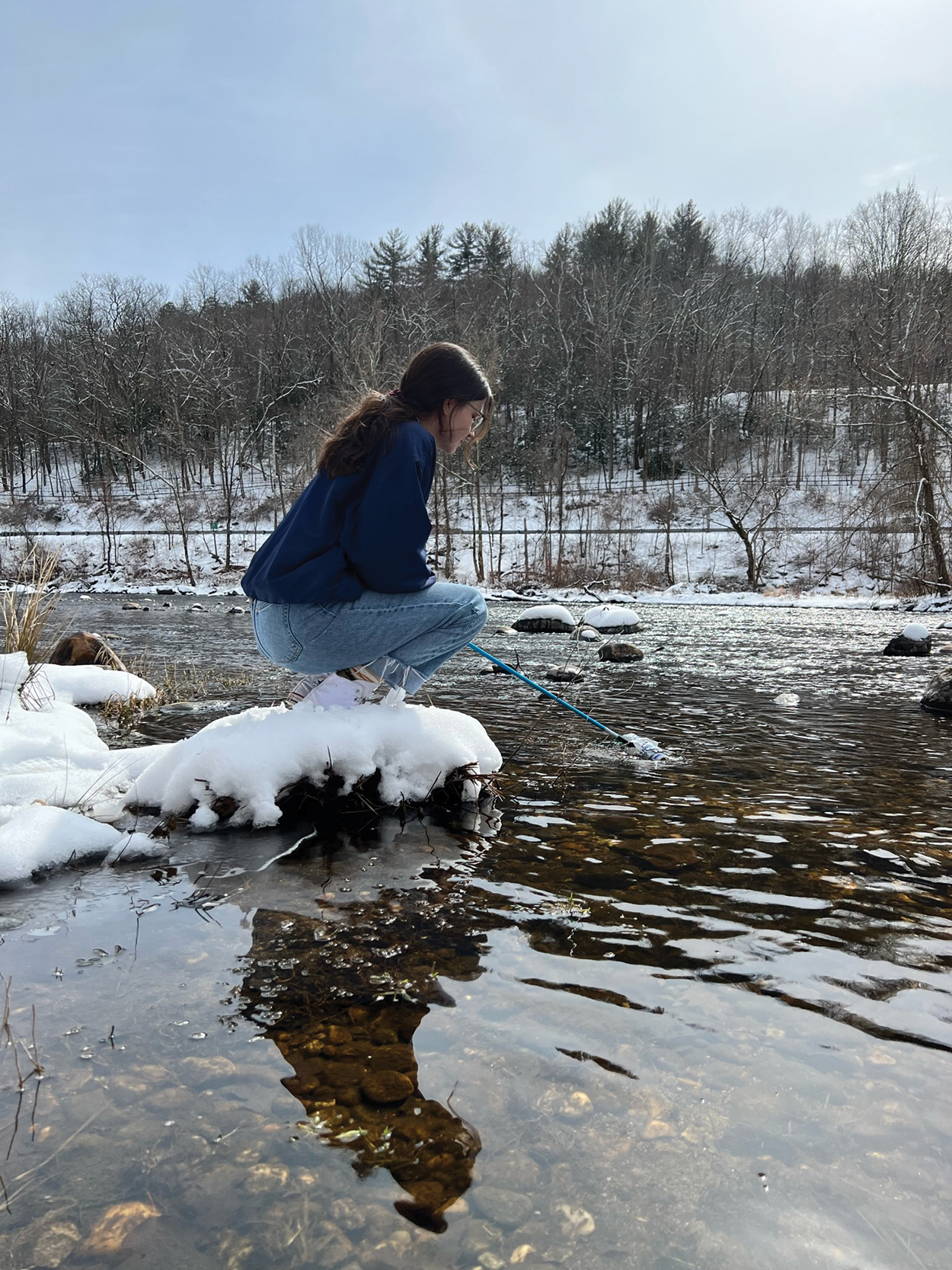
WATER QUALITY & BIOLOGICAL DIVERSITYSixteen sites were monitored for chloride in 2023. This program is in partnership with the Izaak Walton League of America (IWLA) Salt Watch program. Sites are monitored year-round to determine how locations fare throughout the year, especially in winter months when road salts are applied, and in summer during high-production timesContinueContinue reading “Chloride Monitoring”
Water Quality: Riffle Bioassessment For Volunteers (RBV)
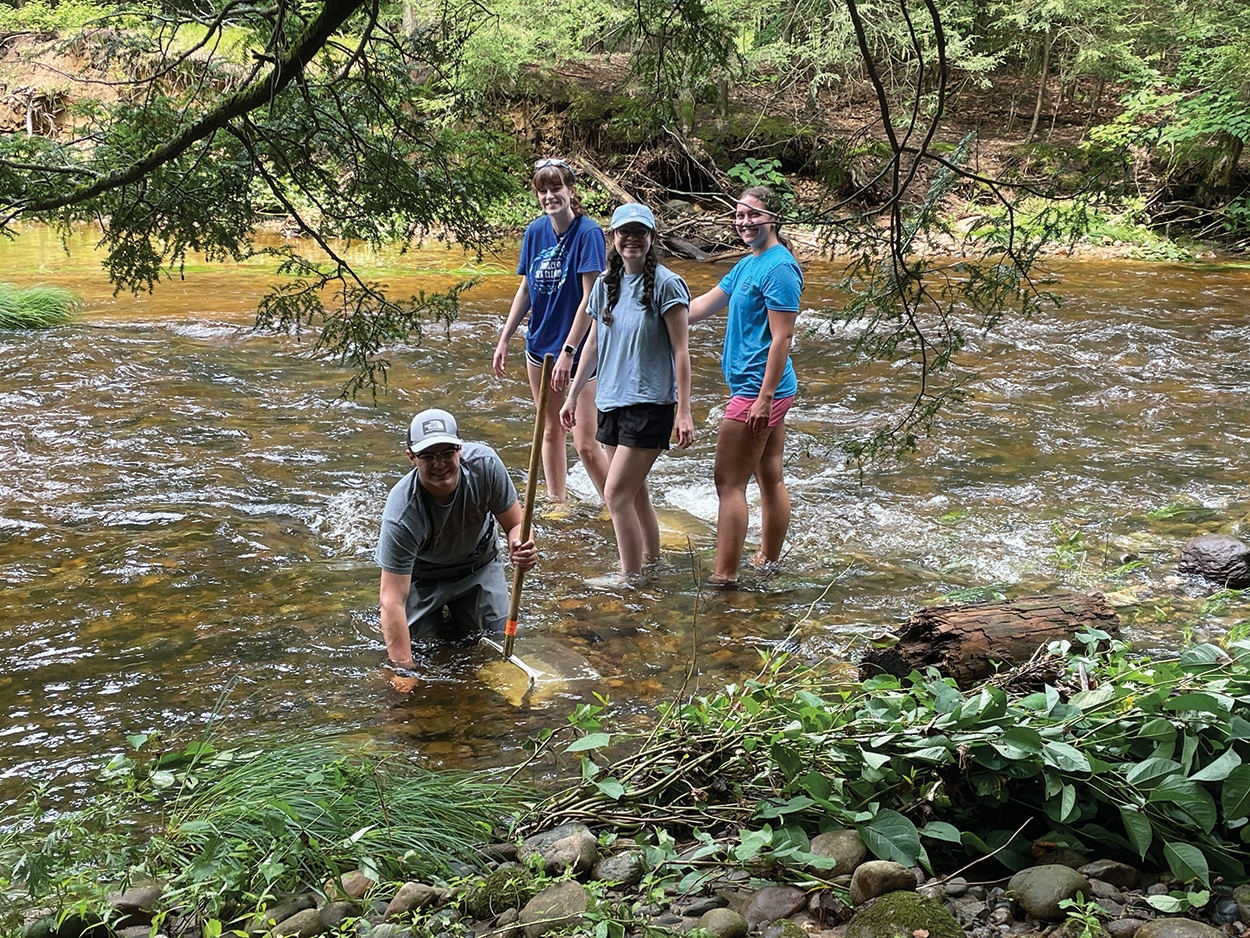
WATER QUALITY & BIOLOGICAL DIVERSITYThe Farmington River Watershed Association also conducts macroinvertebrate sampling days in the fall to monitor streams of the watershed on a rotating basis through the CT DEEP’s Riffle Bioassessment for Volunteers (RBV) program. Macroinvertebrates are used to identify high-quality, cold-water habitats in tributaries. Both temperature and macroinvertebrate data help streams orContinueContinue reading “Water Quality: Riffle Bioassessment For Volunteers (RBV)”
POSTPONED: The Farmington River Archaeological Project: 12,000 years of Native History with Ken Feder
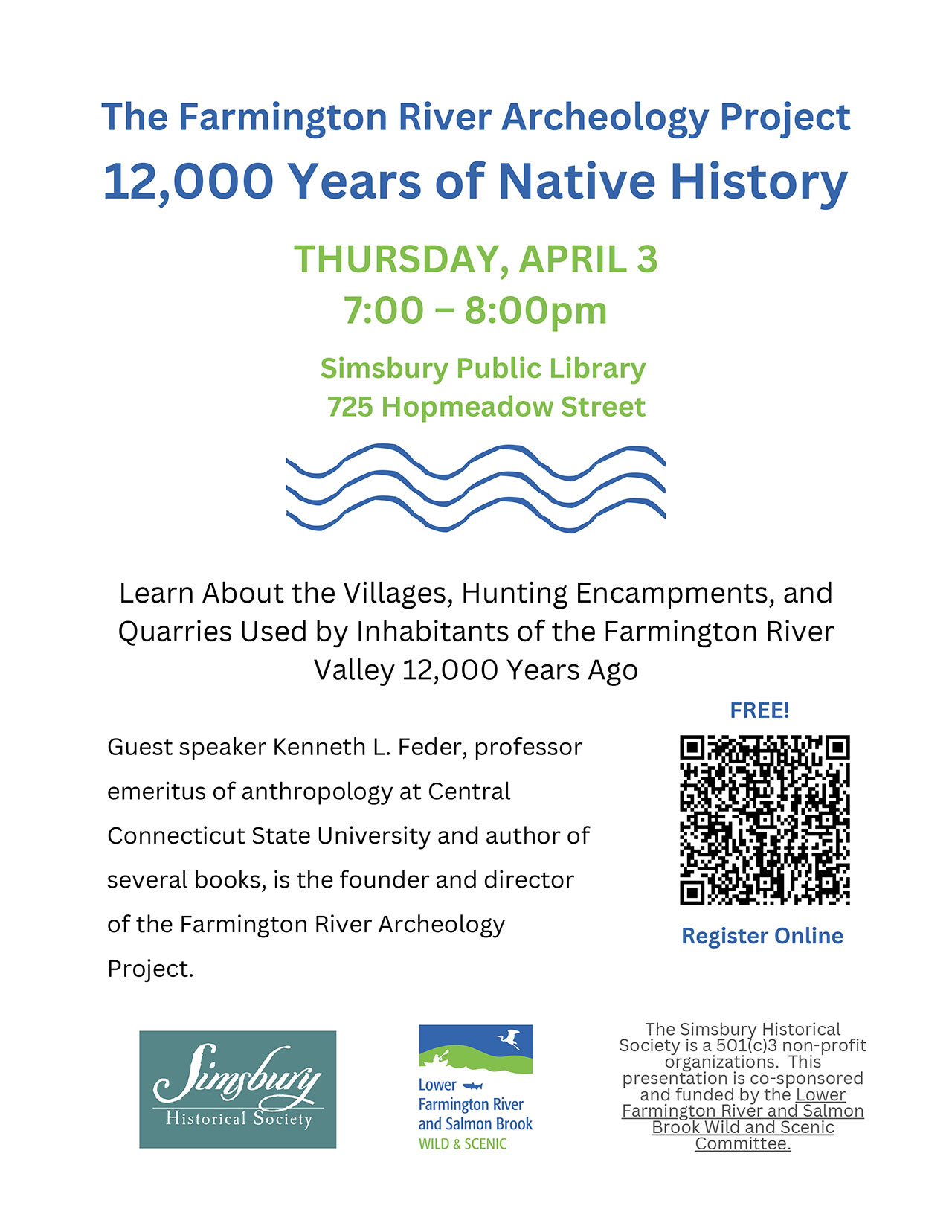
This event has been postponed to May 5. Kenneth L. Feder, professor emeritus of anthropology at Central Connecticut State University and author of several books, is the founder and director of the Farmington River Archeology Project. He and his crew have revealed remains of the villages, hunting encampments, and quarries used by inhabitants of the FarmingtonContinueContinue reading “POSTPONED: The Farmington River Archaeological Project: 12,000 years of Native History with Ken Feder”
Dragonflies and Damselflies Report
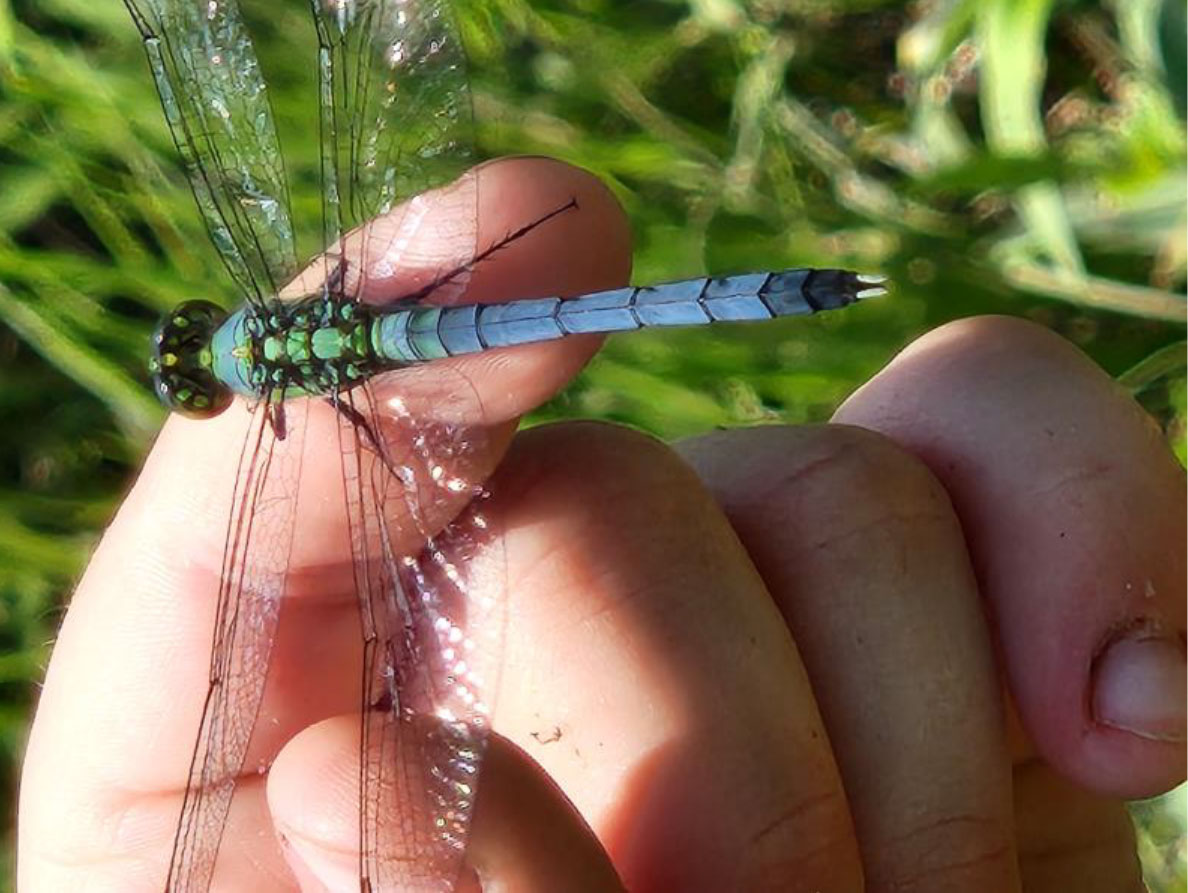
The Lower Farmington River and Salmon Brook Wild & Scenic Small is pleased to present “Changes in the Composition of Odonata (Dragonflies And Damselflies) Utilizing the Lower Farmington River/Salmon Brook Wild and Scenic Area” by Jay Kaplan, Co-Director of the Roaring Brook Nature Center in Canton, Connecticut. The study was funded through a grant fromContinueContinue reading “Dragonflies and Damselflies Report”
Water Quality: Water Temperature
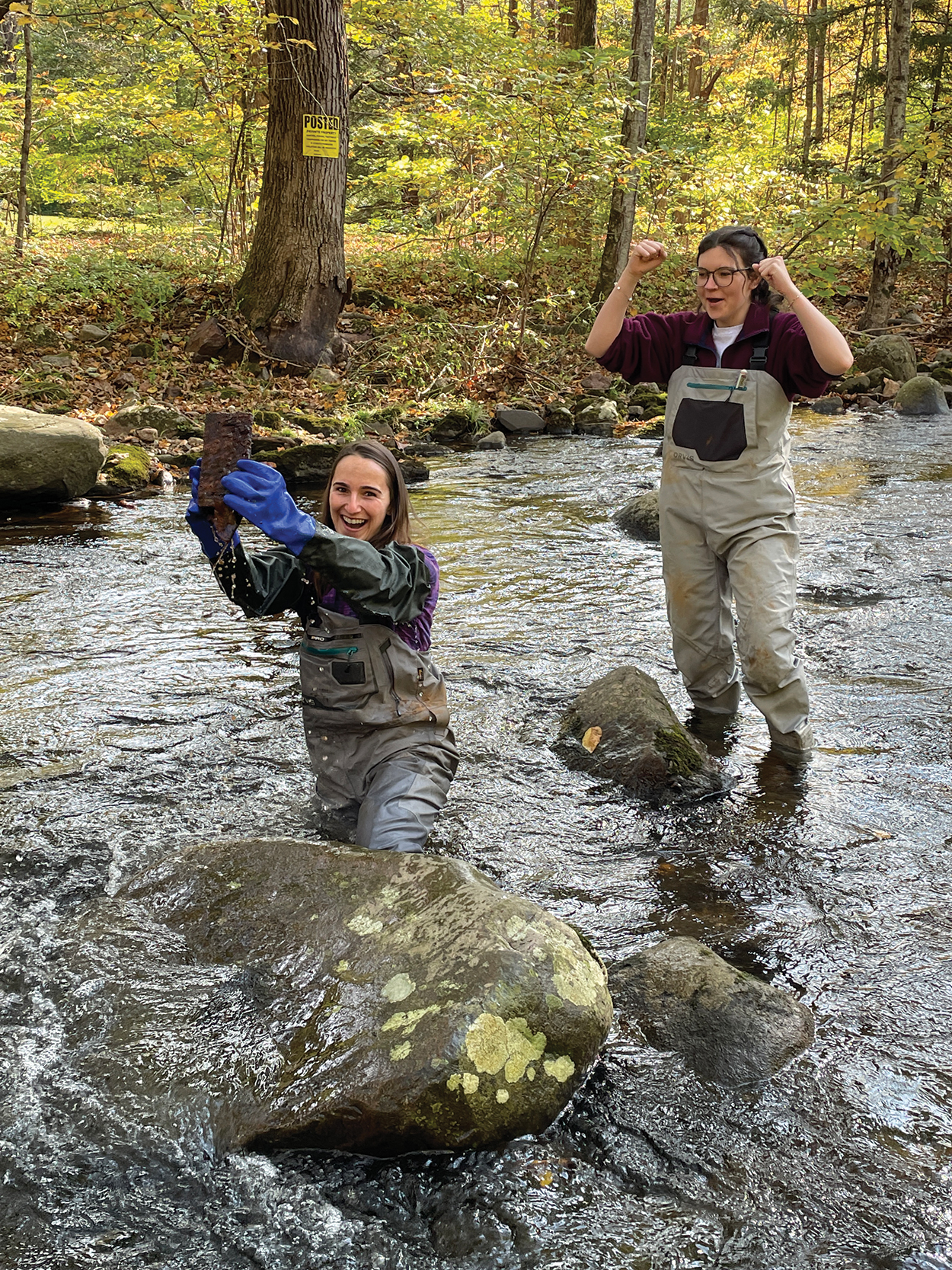
WATER QUALITY & BIOLOGICAL DIVERSITYThe Farmington River Watershed Association deployed water temperature loggers at five sites in 2023. Loggers record water temperatures hourly throughout the year to monitor ambient in-stream temperatures to identify and document cold water habitat to assess long term trends. Two sites are located in the West Branch Salmon Brook, and threeContinueContinue reading “Water Quality: Water Temperature”
Water Quality: Bacteria
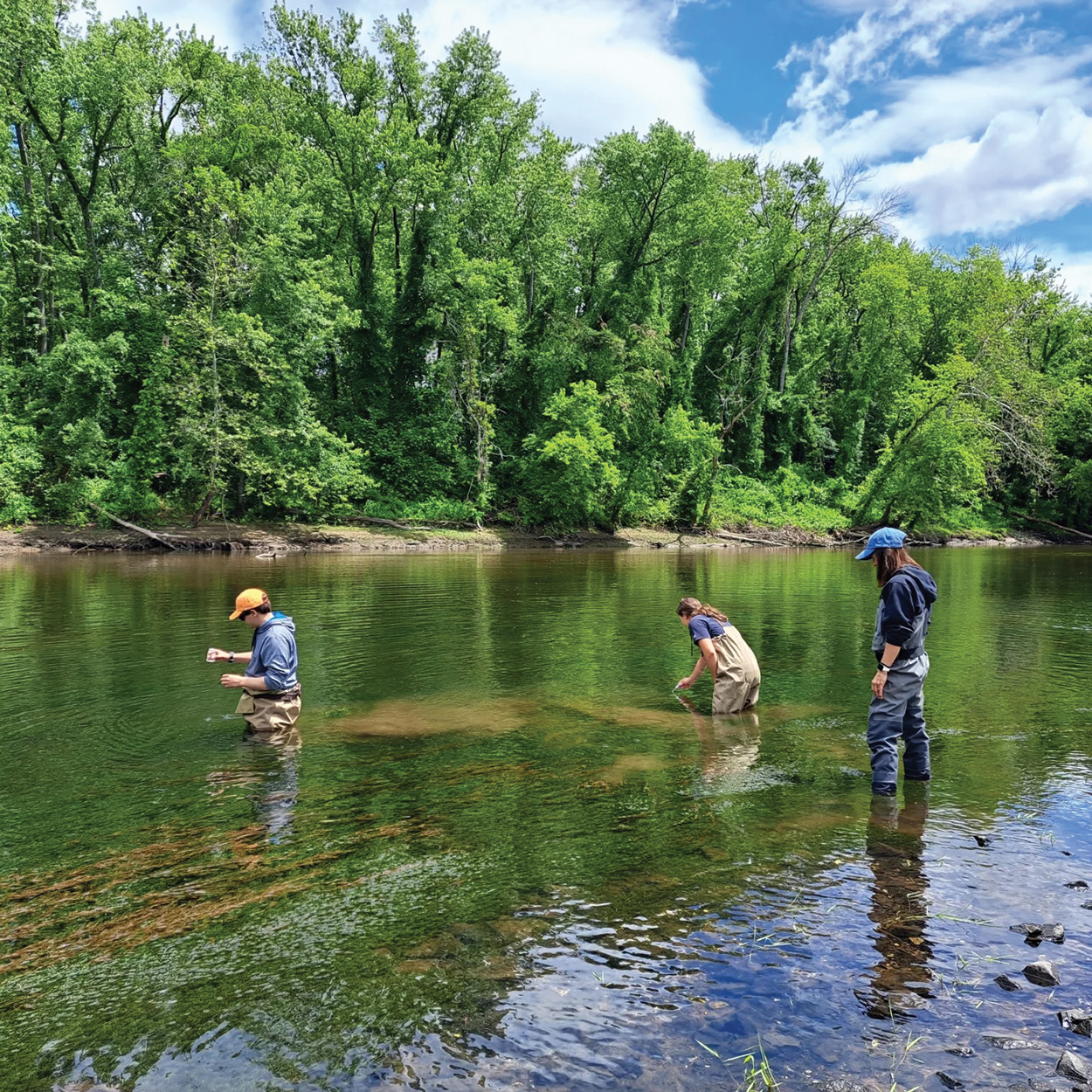
WATER QUALITY & BIOLOGICAL DIVERSITYTwenty-three sites were monitored for bacteria, from June to September. Due to increased precipitation and high flows in 2023, some sites did exceed the Water Quality Criteria for bacteria. Sites that exceeded the criteria include Roaring Brook and the Pequabuck River in Farmington, Munnisunk, Minister and Russell Brook in Simsbury, SalmonContinueContinue reading “Water Quality: Bacteria”
Water Quality Monitoring
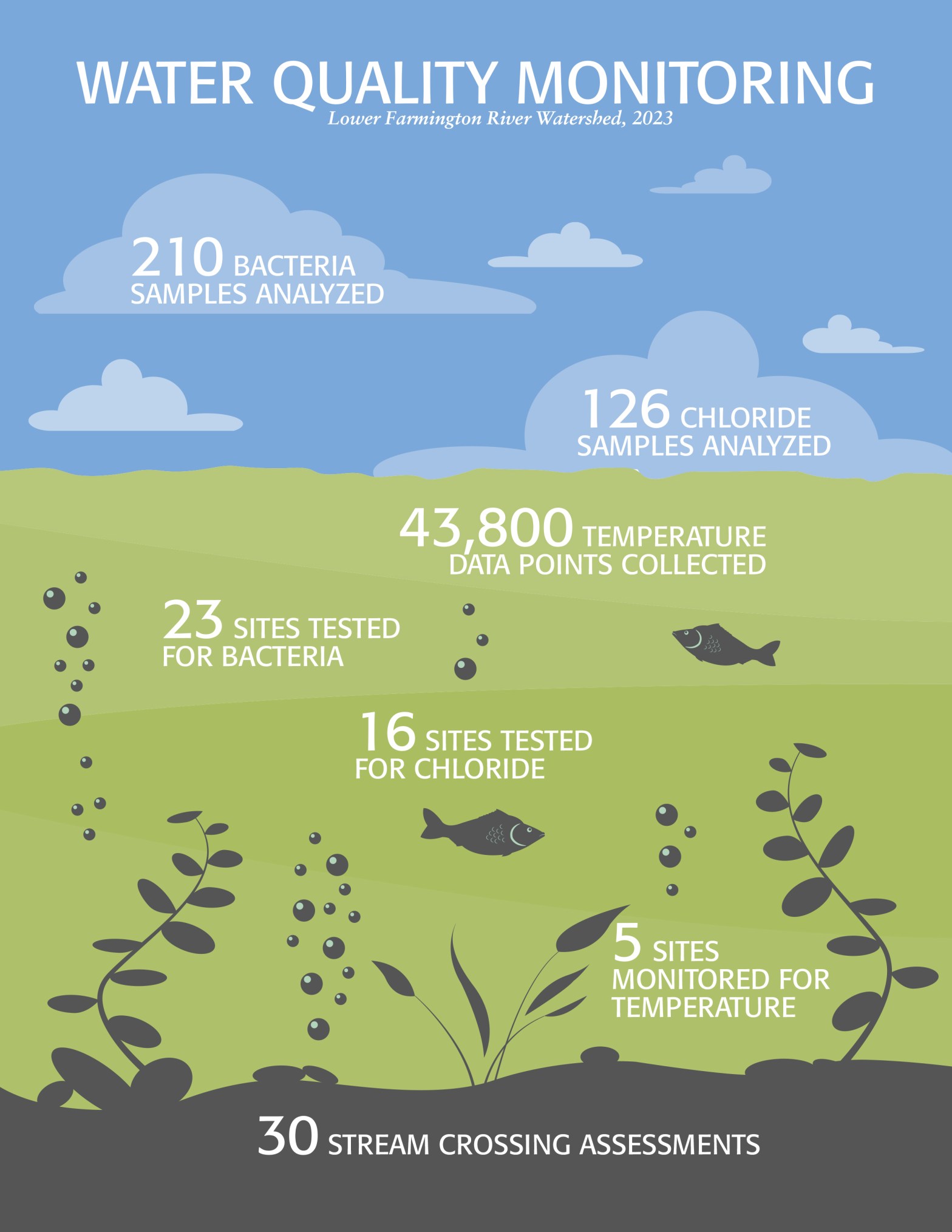
Water quality monitoring has been conducted by Farmington River Watershed Association (FRWA) since 2004. The principal objectives are to: document high quality waters for protection and preservation; measure inputs from tributaries to the Farmington River; establish a database for use in documenting future changes in water quality; identify impairments and locate potential preservation & restorationContinueContinue reading “Water Quality Monitoring”
Lower Farmington River and Salmon Brook Wild and Scenic Annual Report 2023
The Lower Farmington River and Salmon Brook Wild and Scenic Committee (LFSWS) is proud to present its Annual Report for the fiscal year 2023 (October 2022 through September 2023). The report summarizes the work we have done with respect to the river and brook’s special resources for which they were federally designated Wild & ScenicContinueContinue reading “Lower Farmington River and Salmon Brook Wild and Scenic Annual Report 2023”
Granby Public Library Celebrates Farmington River Wild & Scenic Designation
Twenty-five years ago, in 1994, a 14-mile stretch of the West Branch Farmington River from Goodwin Dam in Hartland to the Canton/New Hartford line became a federally-designated Wild & Scenic River! As we celebrate the 25th Anniversary of the Upper Farmington River becoming a Wild & Scenic River – we have another victory – 1.1ContinueContinue reading “Granby Public Library Celebrates Farmington River Wild & Scenic Designation”
Lower Farmington River and Salmon Brook a step closer to federal ‘wild and scenic’ designation
By Will Healey, Manchester Journal Inquirer With the U.S. Senate’s recent passage of a sprawling natural resources bill, the lower Farmington River and Salmon Brook are once again in contention to receive federal designation as a national “Wild and Scenic River.” The roughly 62-mile portion that would receive the designation — which carries certain protectionsContinueContinue reading “Lower Farmington River and Salmon Brook a step closer to federal ‘wild and scenic’ designation”
Great News! We are now officially Wild and Scenic!
The John D. Dingell Jr. Conservation, Management and Recreation Act that was signed into law on Tuesday, March 12, has conferred the status of Wild and Scenic <on the lower Farmington River and Salmon Brook, its tributary. Attaining the Wild and Scenic designation was a labor of more than a decade by the Wild andContinueContinue reading “Great News! We are now officially Wild and Scenic!”

