FRWA requested LFSWS funding in order to collect more data through its conductivity monitoring program, which began in 2023. There is a strong correlation between conductivity levels and chloride levels. That means higher conductivity indicates larger amounts of chloride (mostly from road salt) in the water. How elevated chloride is and for how long determines which water courses have toxic conditions for aquatic organisms.
Because chloride levels can change rapidly, direct periodic testing will likely miss some episodes of toxic conditions. To work around this problem, FRWA bought 6 conductivity loggers in 2024 and in 2025 requested funding for 5 additional ones to allow more extensive and continuous monitoring of conductivity in streams that were considered likely to have either chronically or acutely high levels of chloride based on earlier data.
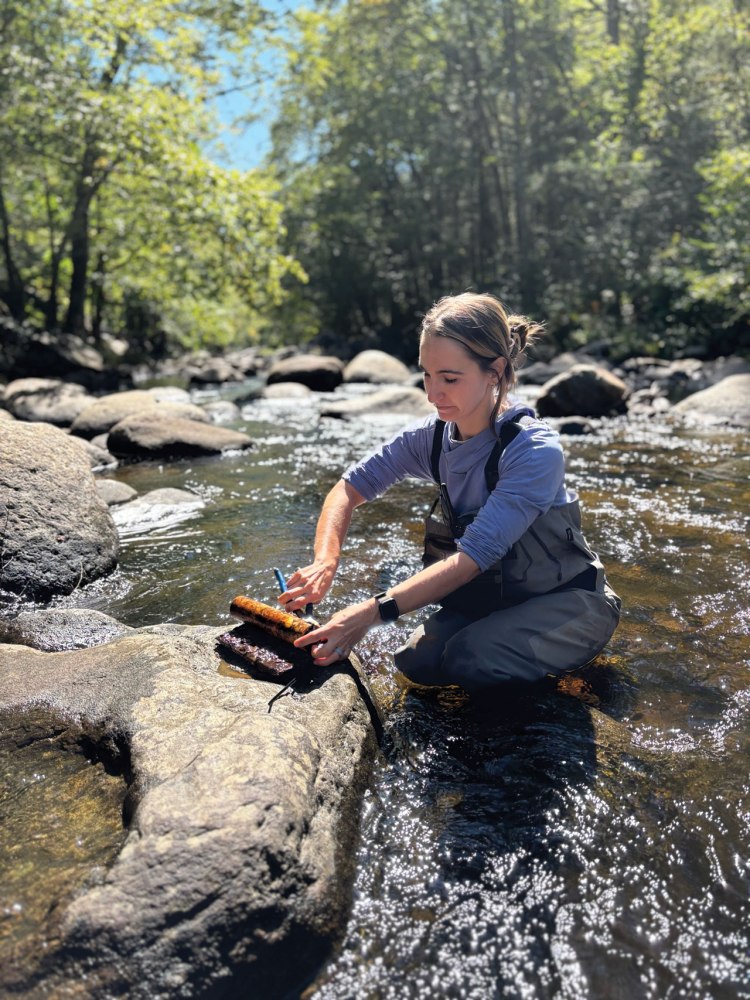
FRWA reprogrammed its conductivity loggers to record conductivity every 15 minutes instead of every hour and placed its loggers at 15 sites including in tributaries and at 2 sites in the lower Farmington River itself. With increased monitoring, FRWA was able to determine which sites did not have a chloride problem and which sites had either chronic or acute levels of toxicity. Through this work, 22 acute conditions and 11 chronic conditions were confirmed at monitored sites, most of which were in Windsor.
2025 Education, Research & Stewardship Projects
READ MORE IN THE

