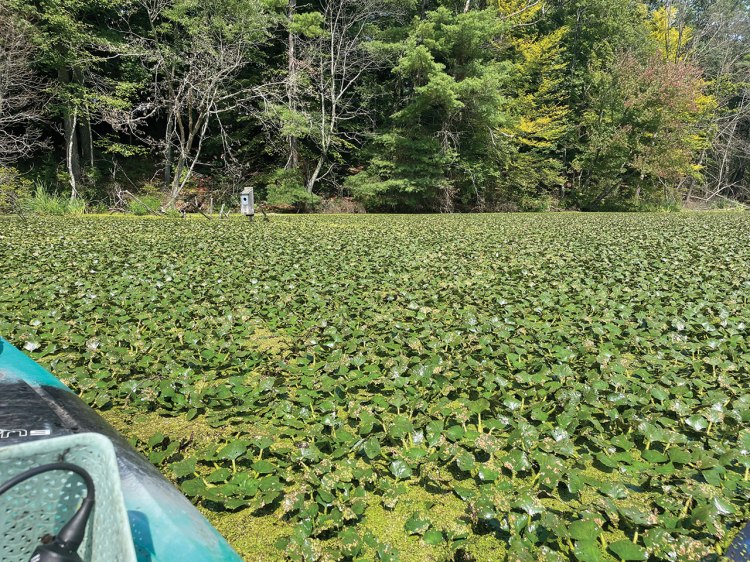
In 2022, the Connecticut River Conservancy alerted the FRWA to the presence of invasive water chestnut in Barber Pond on Mill Brook, a direct tributary to the Farmington River in Bloomfield. The dam that creates Barber Pond is slated for removal by the Connecticut Department of Energy and Environmental Protection (CT DEEP). Getting rid of the water chestnut is the only way to prevent its spread into the lower Farmington River when the dam is removed.
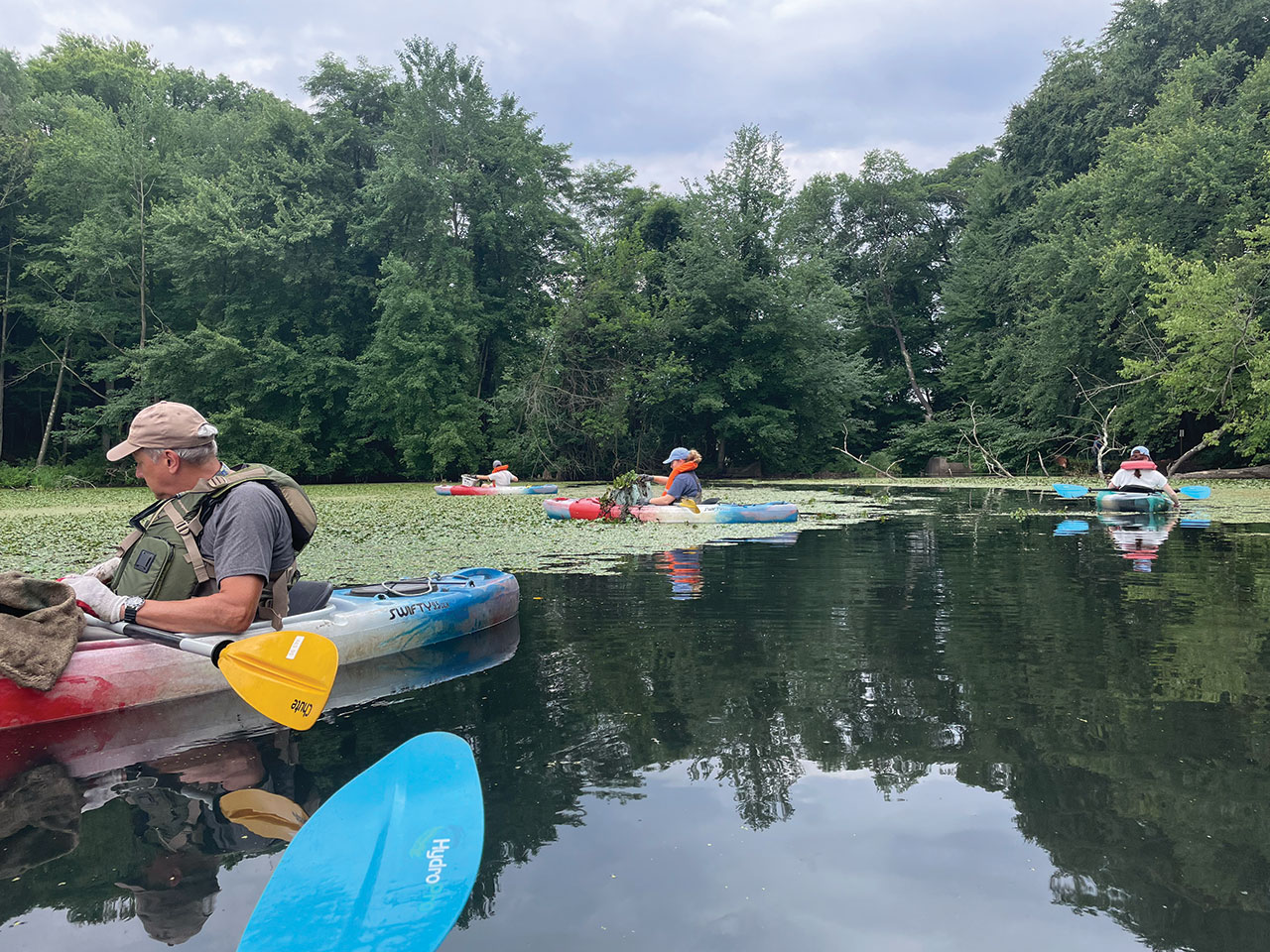
In 2023, FRWA began a multiyear program to eliminate water chestnut from the pond. The work involved FRWA staff and volunteers hand-pulling the growing plants and safely moving them offsite. Since the plants produce seeds that remain viable for years, follow-up work has continued to be necessary. In 2024 and again in 2025, with funding from LFSWS, FRWA hired All Habitat Services to apply herbicide twice during the summer. This kills the plants that emerge from germinating seeds. In 2025, FRWA staff and volunteers pulled and composted 1,100 lbs. of water chestnuts prior to the herbicide applications.
FRWA also monitored water quality in the pond and downstream in the brook both years. Both the pond and brook are unfortunately typical of urban waterbodies in the northeast in that they have low levels of dissolved oxygen, high temperatures and relatively high levels of chloride during the summer. These conditions do not support freshwater fish or many other species of aquatic organisms and reflect both the effects of the presence of water chestnuts and ongoing sources of salt pollution. FRWA will continue with hand pulling of water chestnuts until the dam is removed and has planned for 2 more herbicide treatments for 2026.
2025 Education, Research & Stewardship Projects
READ MORE IN THE

